Reflections

Tap-Tap on the DL

Three taps meant: I’m here. I’m thinking of you.
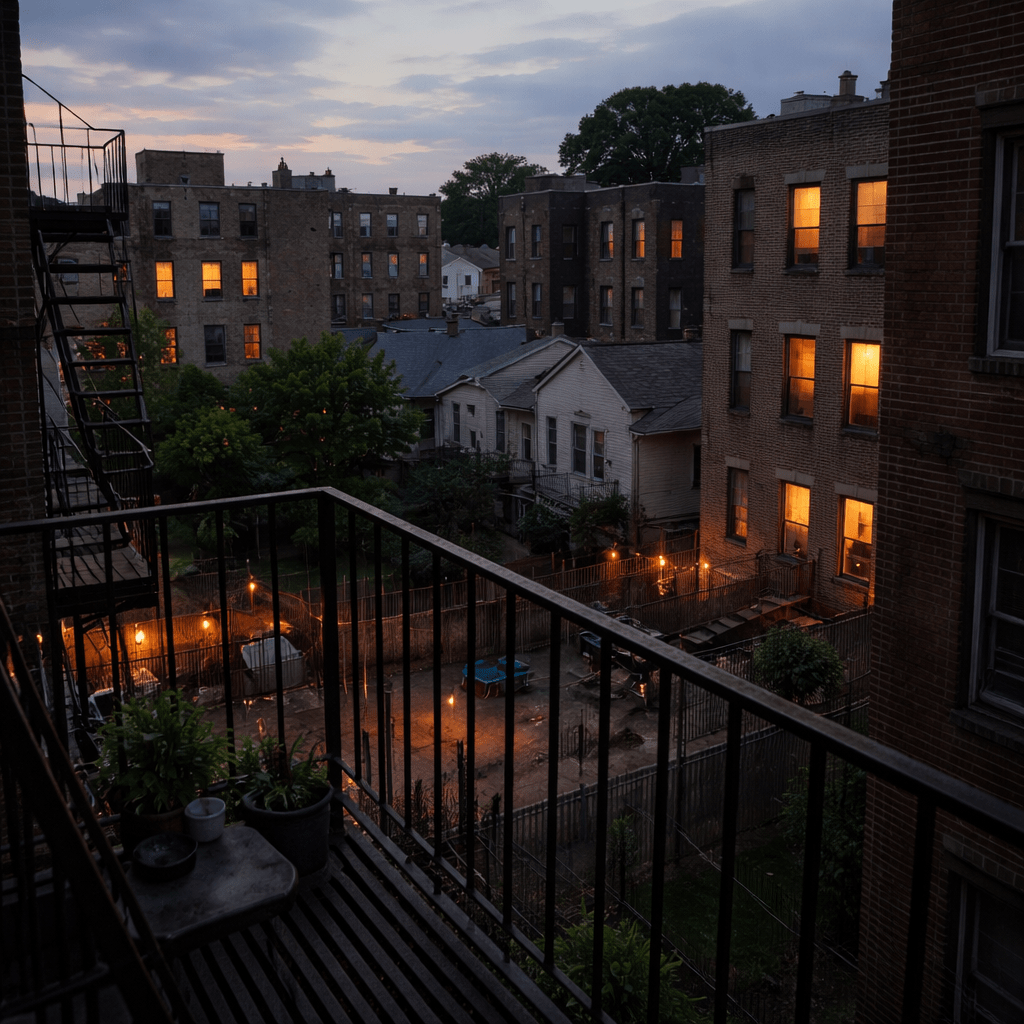
It was the middle of August in New York City, I’d never been to the Bronx, let alone that far uptown on the 2 line.

Buzzer.

“Hi, I have an appointment to see Brenda,” I said in my best voice to the few women in the management office. 

“That’s me, come sit down,” a pleasant, older woman gestured to her work area. 

And within the hour, I had been accepted into their program for women with addiction problems. 

I went into what someone later termed transition shock at the noise level, in between people chatting, music blasting from the dining room while someone played a different playlist in the backyard. But right after rushing up three flights of stairs to put away the plastic bag with the stuff, there I was, in that very room from where the deafening sounds came. 

I detest plastic bags to this day, the cheap, flimsy NYC bodega kind. That one. Everything I owned fit inside it.

Deafening to me. 

In time it almost grew on me, especially a handful of the women who, for different reasons now contribute to this story. 

“Hey, you want one?” offering an open pack of Newports, from the door to the backyard. 

That was Myrna, the young woman with whom I shared the room. Her story was of abandonment, neglect even of self as addiction had swallowed whatever plans she once had.

And Esther who, as someone “confidentially” shared, relapsed and either left or was removed from the program. She and I would’ve made great friends. 

There was Ramos who, true to the old lesbian stereotype, comported herself with a theatrical  level of masculinity. She once gifted me a pair of black Jordache sneakers. 

Full stop. 

Then there was Diana. She took an interest in me and, I, in turn, let myself be flattered by her admiration of me. We soon became “an item,” as she enjoyed saying, much to the chagrin of an admirer I had inadvertently encouraged. I had become reclusive, venturing downstairs only for a quick cigarette and a meal, I felt utterly uncomfortable, and spent most days in the room. 

Diana’s interest, her gentle coaxing, got me out of that room, and out of my head.

It felt good to be asked: “Hey, where were you all day?” No one had asked me that in years. We got to the point of late night conversations, her feet discreetly on my lap, going over old VHS tapes. A Field of Dreams was the very first of many movies she shared with me. 

In the evenings, we felt a certain intimacy to my tapping on the ceiling to let her know I was back, much to the amusement of Myrna. Three taps, code for “im here, im thinking of you.” 

And Darlene, the go- between, carrying love notes back and forth in her ever present wicker purse. And also the CD player left on my bed. “Play track 14” discreetly tucked in. 

The one day when things got intense between Diana and me while my roommate was out. A nice, slow burn, fewer and fewer pauses. 

The door burst open. I felt my stomach drop. 

My admirer screeched in horror and ran to the management office. 

I was given a week to move out, a magnanimous act from a director who prided herself in having removed a pregnant girl from the program despite the girl’s kneeled supplication. 

In my optimism, I took the embarrassment as a clue to pursue a deeper involvement with Diana. 

It did lead further into my renewed life in sobriety although not in ways I had expected. And for the first time in over two decades I was not disappearing into a bottle of whisky.
Reflections

Anyone from New York?

It had been a couple of years since I’d seen Carlos, an old acquaintance from my days of daze.

“Here, use my screen name, someone will reply!” Carlos insisted, confident that his idea was the solution to my solitude. I had told him that yes, I’d been looking to meet someone, although not necessarily for romance—more along the lines of companionship.

Not a single reply.

We soon parted after the minor disappointment, Carlos assuring me no one replied because I was online under his screen name. “Next time you come over, we’ll set you up with your own,” he said warmly. I never saw him again.

This was in the early 2000s, when AOL chat rooms were still a thing.

Life went on with its frequent struggles and detours until I had the funds to buy myself a desktop. A used one, refurbished by Per Scholas. After a lifetime in the stupor of addiction, this was among the first significant choices I made for myself.

The desktop turned out fine for my purposes, which were essentially to stare at it after work and figure out how to do things. One evening I remembered Carlos and his much-touted AOL chat rooms, though not his screen name.

I eventually got bold enough to go from lurker to occasional chatter, and while there were a few fun conversations, most people seemed interested in casual encounters.

Many chats later, I’d grown tired of them, mostly for that reason. Things were gradually improving for me. I’d started looking for an apartment, still worked for a well-known nonprofit, and had begun college as an adult student.

My sobriety date came around—no one with whom to share the suffocating July heat. It was still just me in that basement room with the small rectangular window that looked out onto gravel and the feet going in and out of the driveway.

“Let’s take a look at the chat room,” I told myself, looking to lighten the day.

The chat was much as it had been in prior weeks: the regulars, their childish cliques, their conversations peppered with the same old obscenities. Shortly after, I turned the desktop off, in a weird mix of disgust and loneliness. In retrospect, the mix of emotions was more than I could explain even today: I found myself covering my face with both hands, sobbing, asking Spirit for someone for me. The intensity of that moment surprises me to this day.

In late July, I typed: “Anyone from New York?” in a cute blue font, no less. The old refurbished desktop wobbled on the box it had come in. Maybe good things do feel fuller when shared. 

“Hi.”
“I’m in New York.”

After a few pleasantries, I cut to the point.

“Do you have children?”

“Yes, they live with their father and they’re big… is this a problem, sweetie?”

“No. They’re not that small, and they don’t live with you.”

“I have a second question: do you cook?”

“What? I can make you a meat stew that’ll rattle your bones, the best pork chops you ever tasted,” her excitement practically jumped off the screen.

Wouldn’t you know it? We met just a couple of weeks later, and not long after that, she showed up with a tray of the most delicious baked ziti. She brought it to our spot in the nearby park.

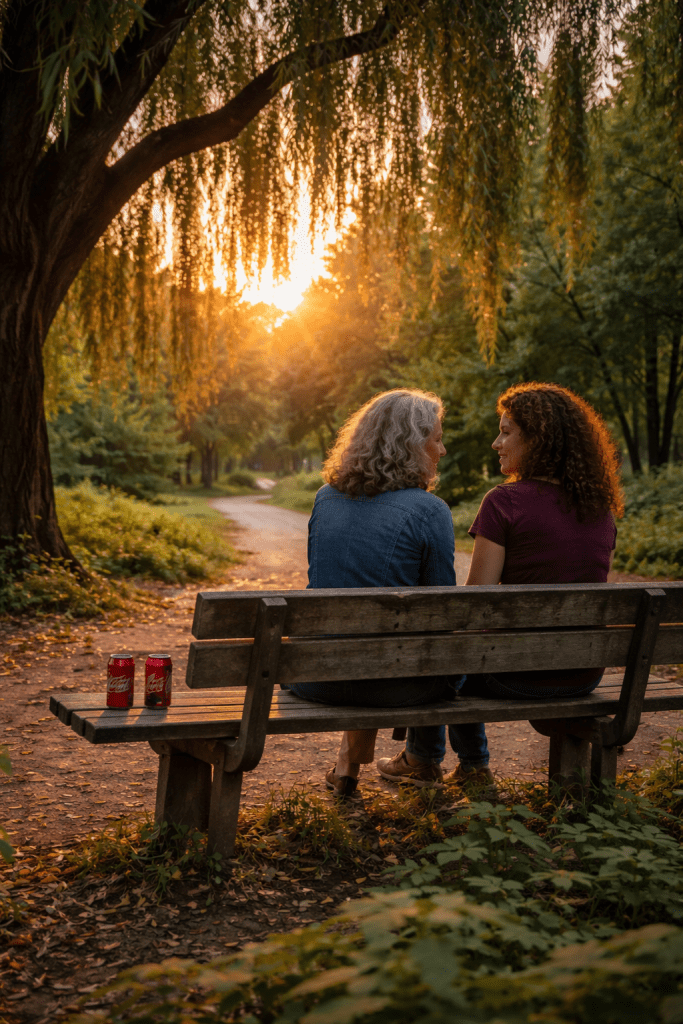
That was part fun, part embarrassment, because I lived in a basement room, but it really turned out to be a lovely afternoon. She even let me keep the leftovers. In retrospect, that day, her gesture, us sharing a homemade meal for the first time, right there on a bench in Bronx River Park, was a gem of a moment.

We’ve been together for over twenty years, not only each other’s spouse but each other’s person.

in that basement room, I had asked Spirit for someone for me. I still wonder if that blue-font question into an AOL chat room was only me reaching out or if something had already started reaching back.

Reflections

Lumpy Beds and Other Luxuries

Last night I must’ve been half asleep when I started muttering about our bed, how that old, lumpy mattress would soon just kill my back dead. How is it that I still have this thing here?

The truth? I could’ve replaced it long ago. I could’ve upgraded the furniture, bought the better things. But I’ve never cared much for that kind of new. I’ve always preferred what’s stayed with me, the things that have weathered time alongside me.

And yes, the bed could use replacing. But here’s what I remembered, somewhere between half-sleep and gratitude: it wasn’t all that long ago that I was dozing off in laundromats, trying to stay warm in the dead of winter, or in emergency rooms, pretending to be someone’s family.

A spot on a lumpy bed, a blanket like the one my wife gave me, would’ve been heaven.

I don’t ever want to forget the long road that led me here, to the comforts of home and, yes, our old bed and the tender lives that came to rest beside it.

Remember where you came from.
And be gentle with where you are.

Reflections

The Nitwitzes

“I want a baby,” Meera announced.
Randolph blinked. “Now? Meera, we got bills. I’m still in school, remember?”

A month later, he strode into work, grinning like he’d won the Pick 5.
“Yo, imma be a dad!”

Silence. Stares.
Then, from the back of the office:
“Uh… congrats, man,” someone mumbled, the enthusiasm flatter than a DMV clerk’s stare.

At some point, Meera called her mother to inform she’d be moving upstate for the rest of the pregnancy for “support.” That lasted five weeks, which exceeded everyone’s expectations. By mid-trimester, she was back in the Bronx.

She and Randolph headed straight to his mother’s housing project apartment, where his older brother had been scrounging off their mother for years. The guy somehow got partial custody of his kids on weekends, so the place was already bursting. Randolph—the only wage earner in the whole setup—was crashing there too. Now Meera sat like a queen on the couch, either unwilling or unable to navigate social services for assistance.

Randolph’s grin was long gone. He seemed equally unwilling or unable to grasp what was really coming.

Much could be said about how society romanticizes childbirth and motherhood. And yes, indescribable admiration goes to women who choose to become mothers. But honestly, some of what goes into the process can be flat-out traumatic. Maybe both things are true. Maybe it can be both, traumatic and beautiful.

Still, here they are, the two nitwits in over their heads and at the center of it all, a baby.

Randolph’s latest mission? Buy a couple dozen cupcakes from the bakery down the street. The kind with blue and white filling revealed when bitten into, an ultra low-budget gender reveal.

Meanwhile, Meera, still in a kind of stupor, struggles to navigate even state medical coverage, let alone housing or other basic resources.

And yet, somehow, the baby’s coming anyway.

The baby is coming.

Reflections

She Said, Calmly

It was a bright afternoon, still early, the kind of winter morning when holiday shopping hits a fever pitch. The neighborhood buzzed, overflowing with offers of cheap “designer” perfumes and last minute deals.

I was standing outside the post office when I heard them. Not saw — heard.

“Mom, mom!” one of the girls shouted, breathless with joy.
“We can get it, can we? Yes, right? Pleeease?”

She couldn’t have been more than ten, nearly bursting with excitement.
Her younger sibling stood beside her, parroting her every move, not that she fully understood.

Then I noticed their mother.

She seemed to be in her 30s, frayed, like she was holding everything together with a whisper. But when she turned to them, her voice came out calm. Surprisingly calm.

“That’s enough,” she said.
“Whatchoo girls think? You be asking for all sorts of shit like it’s free, but listen,
Christmas ain’t free.
Don’t say nobody told y’all.”

And just like that, the girls fell silent. So did the entire block, it seemed.

To this day, silence surrounds that memory of me, standing on that corner by the post office, the bright winter morning, and the somber expressions on the girls’ faces.
I have never forgotten it.

Reflections

The Voice on the Pier

I inadvertently noticed there were people standing on the pier for some kind of event. It was already evening, and the lights were warming up to that golden hue that flatters everyone. 

I wasn’t there, but I saw it online.

And somewhere between that gentle light, the music, a voice, not quite spoken, crept in:

“Don’t you feel bad that you can’t do things like that anymore?”

A pointed remark, for sure but yet not cruel, a bit smug.

“Wouldn’t you love to be out there, swaying to the rhythm, that cool breeze on your face?”

And, for longer than I’d like to admit, I agreed.

For a second, I didn’t want to be where I was. I didn’t want to be the person I’ve become, the one who now needs help getting up, whose tendency now is to say “not today” more often than “maybe later.”

But the voice didn’t linger.

Because a deeper one rose, quietly.

 “Even if I could go, who would I be standing there for? There was a time I faked it, and after a couple shots of whisky I could wear the usual veneer of charm. If I stayed out long enough I could pretend I was part of something.”

But now?

Now I stay home.
Now I notice when my cats blink slowly at me.
Now I write things down even if no one reads them.
Now I tell the truth.

Even when it makes me ache.