The Julia Series

The Exit

Epilogue

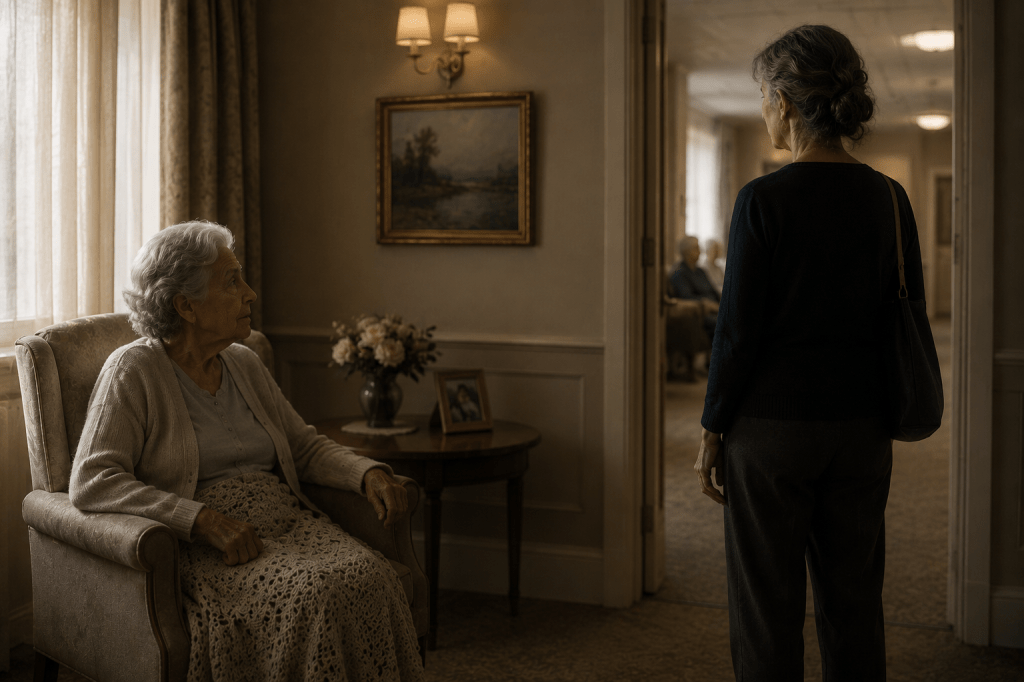
Julia sat in the nursing home room with the television on.

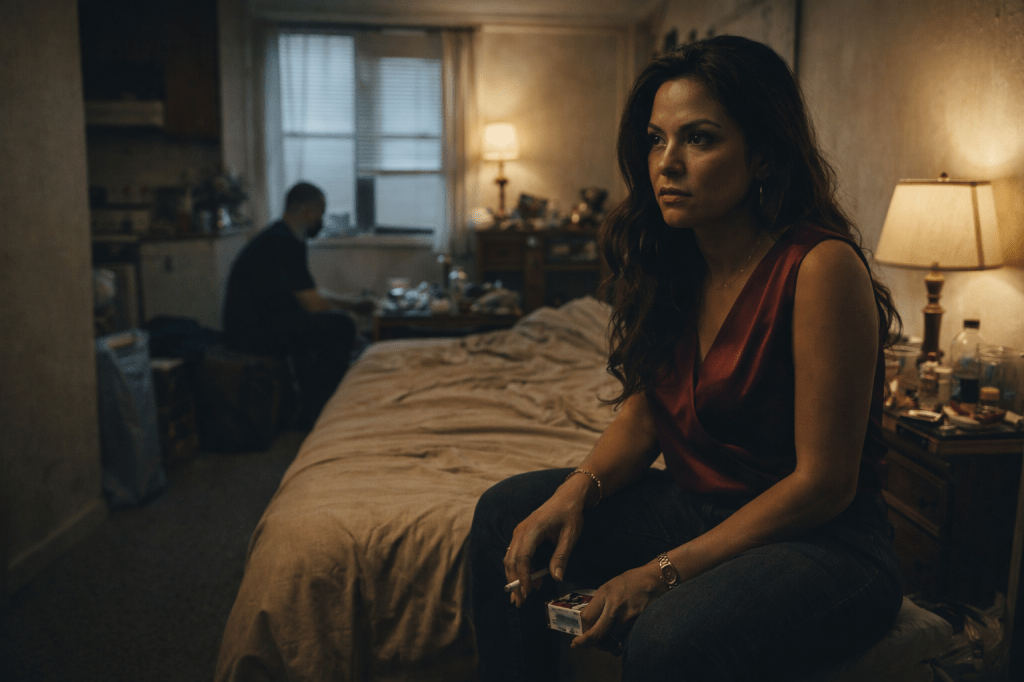
The sight brought back the memory of Julia watching television in her bedroom, back when HBO was advanced. How many times Mila had wished for an invitation to watch a movie from that old gray folding chair, the same one she slept on during the rare occasions she was allowed to spend the night.

The blue light from the screen washed over Julia’s face. Sundown fell across her knees and the nightstand, where a brush sat unused.

She always liked things to be looked after or, at least, to appear that way.

Mila paused at the door for a moment.

Neither to condemn nor to condone.

Not to embrace her. Not even to ask why.

Why did you have me taken away from my home?

You did not want me.

Why did you help the others, but never me?

Did you ever regret it?

No. Mila had not come for any of that.

***

Never flashy, Mila wore clean, pressed clothes. Moccasins. Clothes made well enough to last. A blazer that sat right on her shoulders. A shirt that fit just right.

She stood there in front of Julia in all of that.

Not fancy.

No pretense.

No submission.

Assembled.

Will you look into my eyes?

Julia’s expression shifted between fear and disdain.

And Mila wondered, absurdly, whether this would have pleased her.

Julia always noticed.

The gray chinos. The oversized, frayed red blouse with the tiny pocket on the left breast. The red flip-flops.

Always the red flip-flops.

“Did you notice she came in flip-flops? To my house?”

For days on end.

Her house.

As if lack of money were mud Mila had dragged into her apartment.

As if she had not known.

That one late afternoon, as they were about to settle in for an HBO movie and Mila was expected to leave, Julia got up to walk her to the front door. Quietly, she slipped a folded twenty-dollar bill into Mila’s left hand while the others sat nearby.

“Okay then, dear. Take care. Call me…”

Her face remained composed, frozen in a quarter smile, as if forced her into charity.

Mila took the money.

Of course she took it.

She needed it.

Another humiliation.

How Julia gave it.

That Mila had to take it.

For weeks, she wished she had said no.

Keep it. Keep your twenty and the little performance. Keep the satisfaction of seeing me degrade myself by taking anything from you.

But addiction has no dignity.

So she took it.

And Julia knew she would.

***

The old crime stories played on, but Julia no longer watched television. These days, it was only background noise.

Smaller now.

Not softened.

Just reduced.

There is a difference.

Her hands rested on the blanket. The same hands that had struck the face of a child for things like stealing cocoa or breaking a vase.

Mila stepped closer.

Julia glanced at her.

“Ah, I know you from somewhere. It’s these glasses…”

For that one second, Mila wanted it.

Not love. She knew better than to want love from Julia.

She wanted recognition.

Just that.

She wanted Julia to see. To know she had always been more than the child left standing outside herself. More than the young alcoholic in red flip-flops.

Mila wanted Julia to see that she had survived her.

And maybe not even that.

Julia’s eyes rested on Mila, the same lethal glare. But there was fear in it now.

Clothes.

Shoes.

Hair.

Presentation.

Maybe Julia was no longer capable of judgment. Maybe there was nothing left in her eyes but tired light.

Still, Mila felt it.

That old measuring.

And then she understood something she had not gone there to learn.

Even if Julia approved, it would not be the same as being seen by her.

Even if she looked at the attire and found nothing to criticize, even if she noticed the clean lines, the good fabric, and the woman standing upright before her, it would not be much.

It would only mean Mila had finally come to visit in a language Julia respected.

She stood there long enough to take in the moment, to let it fix itself on her. 

The television kept talking.

Someone laughed in another room.

Julia looked at her.

Maybe through her.

A confrontation would have been unfair.

There was no embrace.

Mila turned toward the door.

Behind her, the room remained exactly what it was: the television, the blanket, the fading sunlight, the woman whose focus in life had been to be admired for what she never was. The same woman who mistook coldness for refinement. The mother who never failed to notice appearances, yet never learned how to see what mattered.

At the threshold, Mila paused.

Not for Julia.

For the girl in the red flip-flops.

The one who had to take the twenty.

The one who swallowed the shame because she needed food, a way through the day.

She did not pity Julia.

Grandma Rosa came to mind.

“You come from good stock, Mila.”

***

I looked at Julia for the last time.

Then I left.

Not healed.

Not forgiven.

Gone.

The Julia Series

What Followed Her Out

Years have passed. The specter of Julia is buried, yet remains.

Mila didn’t know her. No one did.

She knew her arrogance. Her indifference.

Was Julia aware of who first opened that wound?

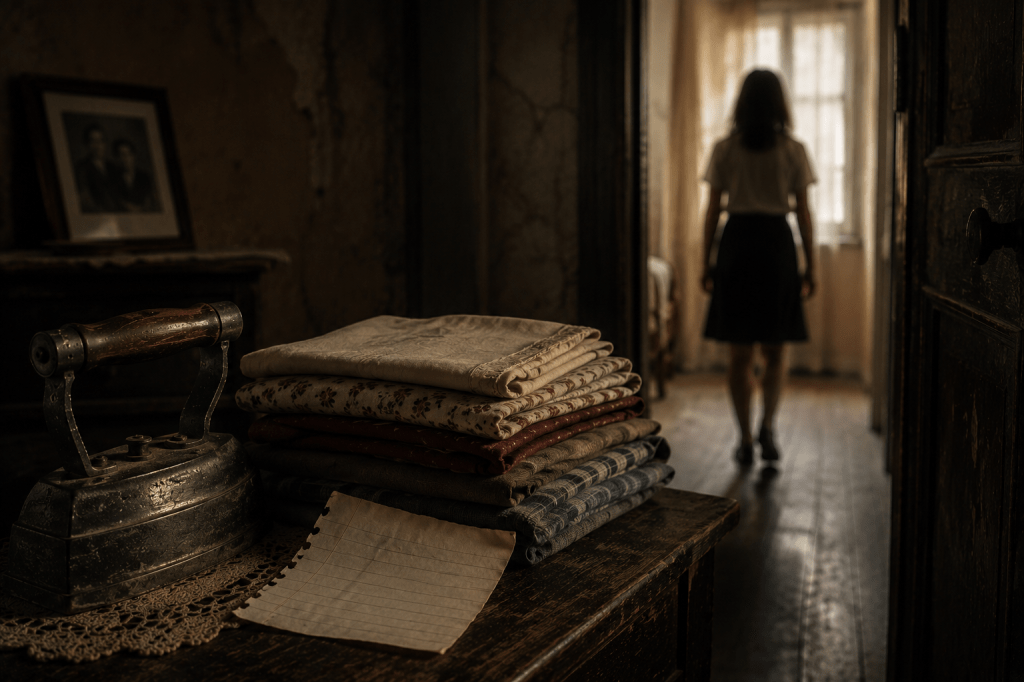
Her father’s wife ran a clothes-washing business and made Julia iron for hours on end while her father said nothing.

The stepmother had a teenage son who could do no wrong.

Young Julia could do no right.

“Baja la cabeza, mierda,” she would say, pulling the girl’s hair to avoid her stare.

That was life for young Julia: in and out of public school, back and forth between her parents, ashamed of her own social class.

Mila never knew what happened in that house.

She only knew what followed her out of it.

***

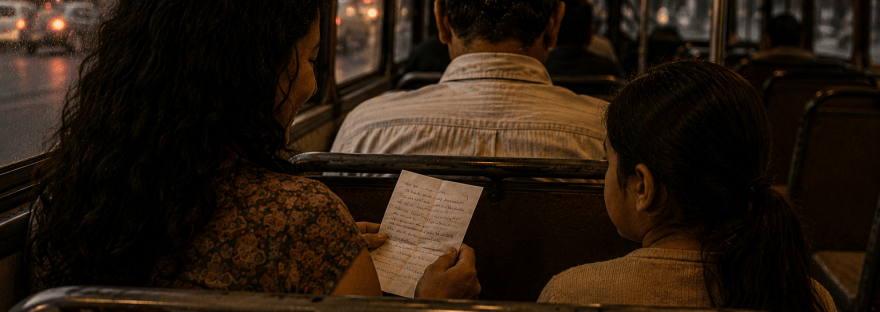
The first time Mila showed Julia a little piece she had written, they were on a city bus, of all places. Mila was in her early teens.

She had thought about it for days, whether to show it to her or not, then dared herself to do it right there.

“What’s this?” Julia said, unfolding the small piece of paper.

“Chip off the old block. Just like her father,” she said, laughing uproariously as she looked at it.

Mila smiled as if that had been the joke all along, folded the paper, and tucked it away.

Yes, Julia had once been a girl forced to lower her head and suffer indignities.

And no one came for her.

Maybe that was where the wound began.

She regretted having children, let alone motherhood.

No reproach there.

But it was still her choice to pass humiliation down to the last child she birthed.

No absolution.

Old age doesn’t exonerate her any more than sobriety exempts addicts from the harm they caused.

At dusk, Mila wonders if, in the recess of what is left of Julia’s mind, she remembers.

Hope not.

The Julia Series

Rooms to Rent

When Mila returned from Baltimore, she was no longer a child, though no one around her seemed prepared to notice. She saw herself as a young woman by then, worldly enough, having been to the US and back, and in her mind school was over.

“I’ll get me a job in no time, with my bilingual eloquence. Watch.”

The same aunt who had helped before helped again, feeding Mila lunch most days because food was scarce in the rented rooms. Whatever money came in came from her father’s hustling. Julia, meanwhile, spent her days dressed as if she might leave for work at any moment, in whatever fancy American clothes had survived the latest eviction.

One day, Julia became visibly agitated: 

“I can’t believe he’d say that, who is this piece of shit…and why is she even talking like she herself never needed MY help, anyway?” 

Vintage Julia.

Turns out her daughter in Baltimore and husband had strongly suggested her two sons, both in their early twenties, find work “someplace, anyplace, start at a gas station even.” Instead of everyone just waiting around for father to bring either money or food, seldom both. 

“My sons are not going to work at a gas station, not in this town.” 

One day Mila came home excited, carrying news of her first real job. What she thought she saw in Julia’s face was not pride exactly, but something close enough for the girl to mistake it for warmth.

It turned out to be a miserable commission job, the kind that paid almost nothing. Mila was still underage, and no matter how articulate or presentable she was, nobody else seemed eager to hire her. 

Once that job fizzled out, Julia found herself with Mila around all day again and suddenly rediscovered her parental authority. She enrolled the girl in a nearby school.

And so it went for months, until the day Mila returned from school and found their mattress propped against the wall out front, along with everything else. 

She found Julia speed walking her humiliation away. 

“Good for you,” she said to Mila, “you’re taking this stoically…” 

In short order, they were all trailing their father, literally walking behind him on the streets, in his search for rooms to rent. 

He found one for Julia and Mila, literally on a rooftop. Two men occupied adjacent rooms. One of them enjoyed curing antlers and skulls by drying them in the sun. The other tenant was an old, puny man who had the audacity to offer marriage to Julia, offering what he thought was a hand up. 

Julia felt wounded. 

“How dare you,” she told him, “this is temporary for me, how dare you, I’m a married woman!”

They were soon thrown out of the rooftop room, too. And, again, it fell on her father to venture out and find rooms. 


The day came when Mila spotted a want ad in a newspaper. A late night cocktail waitress job at a fancy bar in Sheraton Hotel. 

Her father rarely voiced his opinion but when it came to even applying for the job, he was against her interest in it, because it was a cocktail lounge, and Mila was underage.

Julia didn’t seem to care one way or the other. 

Mila got the 6 p.m. to 2 a.m. shift.

From that point forward, her trajectory changed.

Reflections

In Each Other’s Way

I had been living with Manzoor for a handful of years.

Not the kind of living people imagine when they hear that. He had a place, and he had found a couple of roommates to help pay the bills. A generous if frugal man, Manzoor had never asked me to contribute a dime. He saved every penny, cooked for both of us on weekends. Meanwhile, my days were spent drinking alcohol, smoking and watching reruns on the portable black-and-white screen. Kindly put, mine was a numb existence. 

“You know the electronics store on 96th and Broadway? I got a job there,” I told him.

He was getting ready to leave for a month-long trip back to his country of birth. I was annoyed by it, though I couldn’t say exactly why. I had always known he was married. That he had children there. None of it had mattered to me.

If anything, it felt oddly flattering when he told me he wanted to take me as his second wife.

At the interview, I sat across from two managers and told them, without hesitation, I was there for the assistant manager position.

Looking back, one of them must have mistaken my naivete for chutzpah. They gave me a job behind the Walkman counter.

It definitely wasn’t chutzpah.

Soon after Manzoor left, I met Joe. And Rita.

That’s when things began to tilt.

A couple of months in, Joe called me one night to declare his undying devotion, insisting he was done with Claire. As in completely done.

Claire, however, had not received that update and firmly believed she was about to become his wife. She didn’t take kindly to me moving into his apartment, just a few blocks from where I still technically lived with Manzoor.

It was wrong, but I did not even pause to question it.

Around that same time, Rita started working the register.

I remember the first time she looked at me, it was not in passing, not the way coworkers do, but with a kind of quiet insistence, like she had already decided something. 

She didn’t rush it. I pretended not to notice her subtle approaches, building a kind of anticipation I hadn’t felt in years.I was flattered. 

And little by little, she made her way into my days, and then into my thoughts, until there was barely a moment she didn’t occupy. 

The day came when I saw Manzoor off at the airport and, as we embraced goodbye, I cried uncontrollably. I remember his face, the way he looked at me. I think he believed it meant I loved him.

As I write this now, I hope he didn’t.

Because what followed doesn’t match that kind of love.

By the time he called me, as he promised he would, I felt… nothing I could name. I spoke to him easily, kindly, but without longing. Like speaking to someone just a few doors down. 

I cried when he left. I didn’t miss him when he was gone.

What unsettles me now is not that I left. It’s that I had already left before he ever boarded the plane.

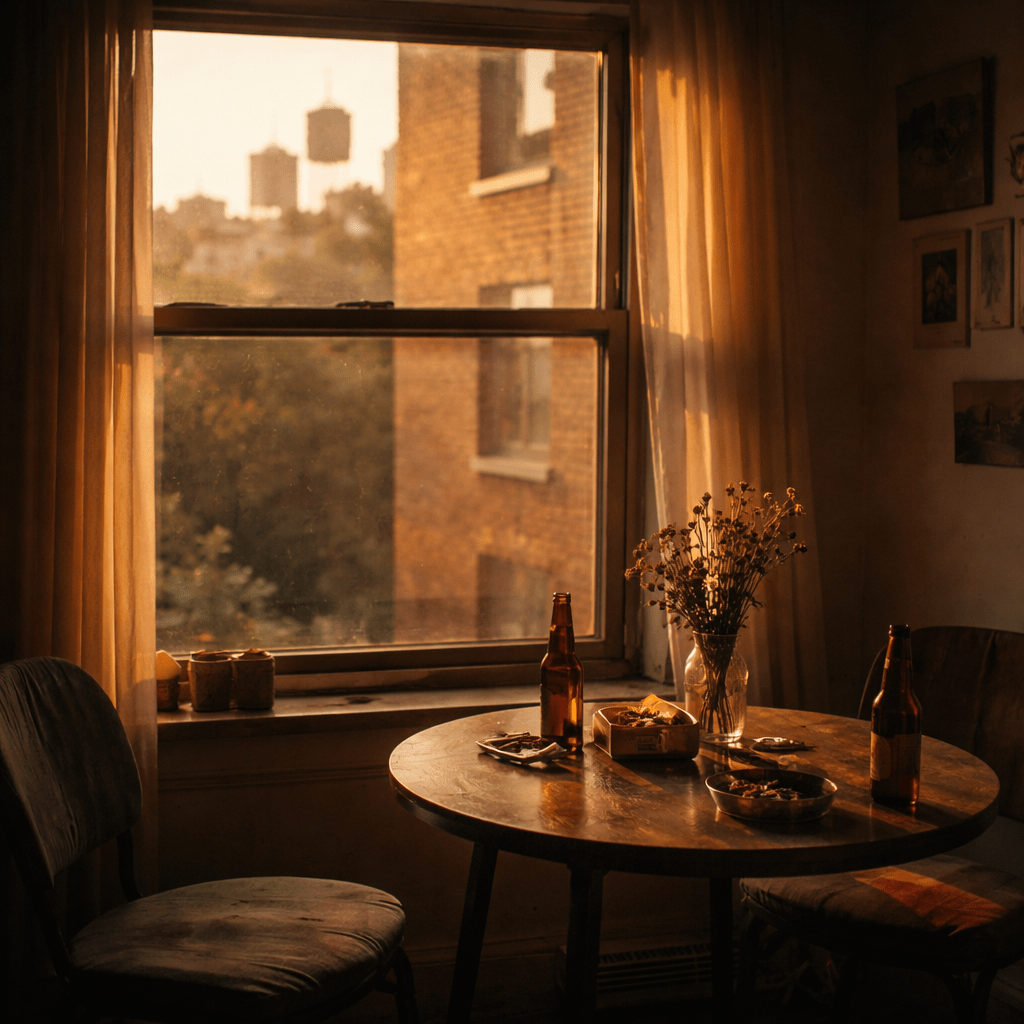
So while Manzoor was away, impulsively, I packed my few belongings, met Joe downstairs and off we went to look at hues of sunset off the brick wall out his kitchen window. 

Joe, to his credit, not even once tried to force things between us; we just settled in like two old beer guzzling buddies while I fantasized of Rita’s fragrance and how it would all be like. 

We found a rhythm. It didn’t last.

Rita got fired for theft and I made an ass of myself by staging a ridiculous, pompous exit, right there in front of everyone. And within minutes, there was Joe running down Broadway: 

“Hey, hey, wait for mee!” as though unhinged.

What can I say, three clueless people just going about aimlessly. 

Not long after, we were behind.

Claire was ecstatic.

Rita soon asked me to move into her small apartment, much to the displeasure of her teenage son whose opinion was never even asked. 

We lasted ten years. 

Reflections

It Wasn’t Free

“I’ve got work with Mathew tomorrow, but we’ll get busy right after,” Rita said, smiling in anticipation.

I knew what “busy” meant.

Her gig was as an interpreter for a small legal firm, specifically for Mathew.
Mathew liked early mornings and clients before sunrise in Lower Manhattan.
The kind of cases that didn’t need to be mentioned at home.

Mathew had an overt interest in Rita, who was decades younger.
She was, at best, a tentative, often unintelligible, interpreter.

Deep in the throes of addiction, I pretended to believe the story. I regret that now.

“So… are we busy today?”

That was the code for I’m buying coke.

Ours was a daily kind of “busy,” to the exclusion of almost everything else, even whatever we once called a relationship.

Every now and then, we’d talk about looking for work, and she insisted Mathew would always be there, which made sense since he owned the building.

I convinced myself she lived there rent-free, a single mom and all…

It wasn’t free.

She paid for it in trade.

I’m not certain knowing would’ve made a difference.

Ten years went like that.
Blurred.
Wasted.
Hard to believe now.

It was a time when internet cafés and Video Professor were still a thing. Rita enrolled in free computer classes. At my suggestion, she recorded the lectures for me to transcribe.

One day she came in, animated, telling me about a job training program working with people with disabilities.

We’d been living together for almost ten years and, by then, I needed something to change.

Within days, I was sitting in a classroom.

That’s when Regina walked in.

Reflections

Lumpy Beds and Other Luxuries

Last night I must’ve been half asleep when I started muttering about our bed, how that old, lumpy mattress would soon just kill my back dead. How is it that I still have this thing here?

The truth? I could’ve replaced it long ago. I could’ve upgraded the furniture, bought the better things. But I’ve never cared much for that kind of new. I’ve always preferred what’s stayed with me, the things that have weathered time alongside me.

And yes, the bed could use replacing. But here’s what I remembered, somewhere between half-sleep and gratitude: it wasn’t all that long ago that I was dozing off in laundromats, trying to stay warm in the dead of winter, or in emergency rooms, pretending to be someone’s family.

A spot on a lumpy bed, a blanket like the one my wife gave me, would’ve been heaven.

I don’t ever want to forget the long road that led me here, to the comforts of home and, yes, our old bed and the tender lives that came to rest beside it.

Remember where you came from.
And be gentle with where you are.

Reflections

The Voice on the Pier

I inadvertently noticed there were people standing on the pier for some kind of event. It was already evening, and the lights were warming up to that golden hue that flatters everyone. 

I wasn’t there, but I saw it online.

And somewhere between that gentle light, the music, a voice, not quite spoken, crept in:

“Don’t you feel bad that you can’t do things like that anymore?”

A pointed remark, for sure but yet not cruel, a bit smug.

“Wouldn’t you love to be out there, swaying to the rhythm, that cool breeze on your face?”

And, for longer than I’d like to admit, I agreed.

For a second, I didn’t want to be where I was. I didn’t want to be the person I’ve become, the one who now needs help getting up, whose tendency now is to say “not today” more often than “maybe later.”

But the voice didn’t linger.

Because a deeper one rose, quietly.

 “Even if I could go, who would I be standing there for? There was a time I faked it, and after a couple shots of whisky I could wear the usual veneer of charm. If I stayed out long enough I could pretend I was part of something.”

But now?

Now I stay home.
Now I notice when my cats blink slowly at me.
Now I write things down even if no one reads them.
Now I tell the truth.

Even when it makes me ache.