The Julia Series

What Followed Her Out

Years have passed. The specter of Julia is buried, yet remains.

Mila didn’t know her. No one did.

She knew her arrogance. Her indifference.

Was Julia aware of who first opened that wound?

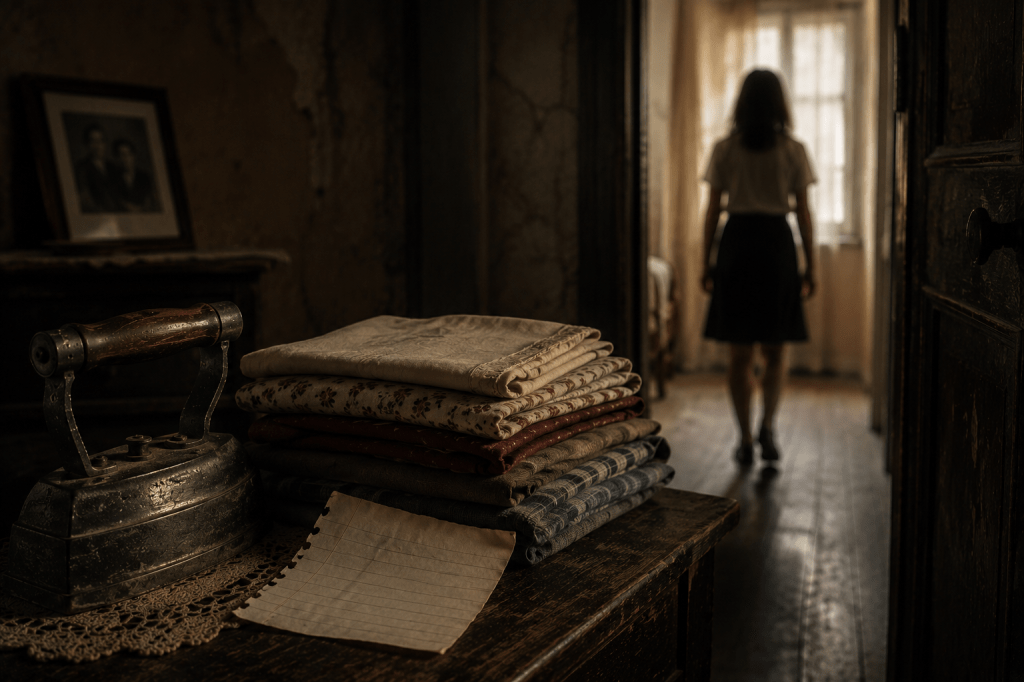
Her father’s wife ran a clothes-washing business and made Julia iron for hours on end while her father said nothing.

The stepmother had a teenage son who could do no wrong.

Young Julia could do no right.

“Baja la cabeza, mierda,” she would say, pulling the girl’s hair to avoid her stare.

That was life for young Julia: in and out of public school, back and forth between her parents, ashamed of her own social class.

Mila never knew what happened in that house.

She only knew what followed her out of it.

***

The first time Mila showed Julia a little piece she had written, they were on a city bus, of all places. Mila was in her early teens.

She had thought about it for days, whether to show it to her or not, then dared herself to do it right there.

“What’s this?” Julia said, unfolding the small piece of paper.

“Chip off the old block. Just like her father,” she said, laughing uproariously as she looked at it.

Mila smiled as if that had been the joke all along, folded the paper, and tucked it away.

Yes, Julia had once been a girl forced to lower her head and suffer indignities.

And no one came for her.

Maybe that was where the wound began.

She regretted having children, let alone motherhood.

No reproach there.

But it was still her choice to pass humiliation down to the last child she birthed.

No absolution.

Old age doesn’t exonerate her any more than sobriety exempts addicts from the harm they caused.

At dusk, Mila wonders if, in the recess of what is left of Julia’s mind, she remembers.

Hope not.

The Julia Series

Too Quiet Here

“Go turn the television on, one of you.”

That was Julia’s first comment when she came home from work.

Not that I was usually there. Once or twice she permitted me to wait for her, but that was definitely not the norm. If she invited me over, it was a charitable “come over, if you want,” she was already home.

Still, that line stayed with me.

Too quiet here.

Years later, as a social worker, I recognized something familiar with clients. Some insisted they needed sound constantly: television, radio, headphones, anything. I heard it said more than once that they were trying to drown out the noise of their own thoughts.

I am not saying Julia should have been a client.

I am saying there were things about her that looked less like personality and more like distress disguised as refinement.

Grandiosity. The bad manners hidden under refinement. The desperate desire to be counted among the elegant hostesses she admired. The way she berated my father, screamed at me, and spoke of “those inferiors” with a rage so thunderous there was nowhere for anyone to disappear.

And mental health care?

Julia would not have been caught dead walking into a clinic, even in a small, traditional city where those things were mostly for people with money and the good sense to suffer discreetly.

Or anywhere, for that matter.

Her refrain was always the same:

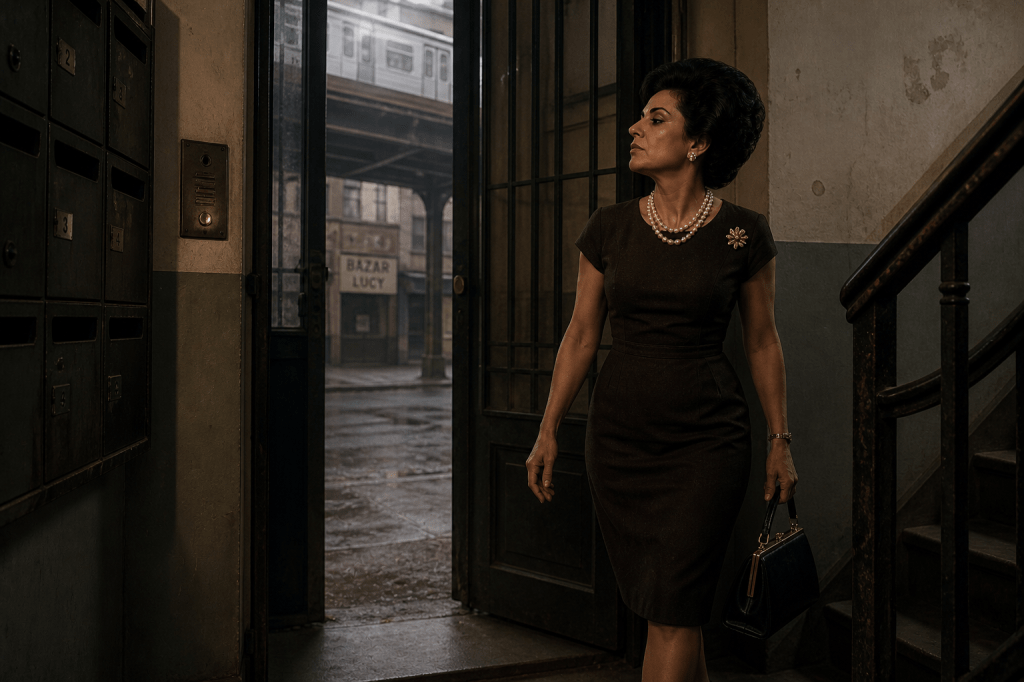
“Your father met me when I was very young, while I was working. He married me so I would be a housewife and a mother to his children.”

Not true.

But for a while, she made it sound as though my father had plucked her from a promising life and ambushed her into birthing children.

I used to hear that and think: here we go again.

Now I wonder.

How much of what I called arrogance was fear?

How much of what I called cruelty was untreated rage?

How much of her performance was just one long attempt not to sit alone in a quiet room with herself?

Funny, no?

Not funny.

Reflections

In Each Other’s Way

I had been living with Manzoor for a handful of years.

Not the kind of living people imagine when they hear that. He had a place, and he had found a couple of roommates to help pay the bills. A generous if frugal man, Manzoor had never asked me to contribute a dime. He saved every penny, cooked for both of us on weekends. Meanwhile, my days were spent drinking alcohol, smoking and watching reruns on the portable black-and-white screen. Kindly put, mine was a numb existence. 

“You know the electronics store on 96th and Broadway? I got a job there,” I told him.

He was getting ready to leave for a month-long trip back to his country of birth. I was annoyed by it, though I couldn’t say exactly why. I had always known he was married. That he had children there. None of it had mattered to me.

If anything, it felt oddly flattering when he told me he wanted to take me as his second wife.

At the interview, I sat across from two managers and told them, without hesitation, I was there for the assistant manager position.

Looking back, one of them must have mistaken my naivete for chutzpah. They gave me a job behind the Walkman counter.

It definitely wasn’t chutzpah.

Soon after Manzoor left, I met Joe. And Rita.

That’s when things began to tilt.

A couple of months in, Joe called me one night to declare his undying devotion, insisting he was done with Claire. As in completely done.

Claire, however, had not received that update and firmly believed she was about to become his wife. She didn’t take kindly to me moving into his apartment, just a few blocks from where I still technically lived with Manzoor.

It was wrong, but I did not even pause to question it.

Around that same time, Rita started working the register.

I remember the first time she looked at me, it was not in passing, not the way coworkers do, but with a kind of quiet insistence, like she had already decided something. 

She didn’t rush it. I pretended not to notice her subtle approaches, building a kind of anticipation I hadn’t felt in years.I was flattered. 

And little by little, she made her way into my days, and then into my thoughts, until there was barely a moment she didn’t occupy. 

The day came when I saw Manzoor off at the airport and, as we embraced goodbye, I cried uncontrollably. I remember his face, the way he looked at me. I think he believed it meant I loved him.

As I write this now, I hope he didn’t.

Because what followed doesn’t match that kind of love.

By the time he called me, as he promised he would, I felt… nothing I could name. I spoke to him easily, kindly, but without longing. Like speaking to someone just a few doors down. 

I cried when he left. I didn’t miss him when he was gone.

What unsettles me now is not that I left. It’s that I had already left before he ever boarded the plane.

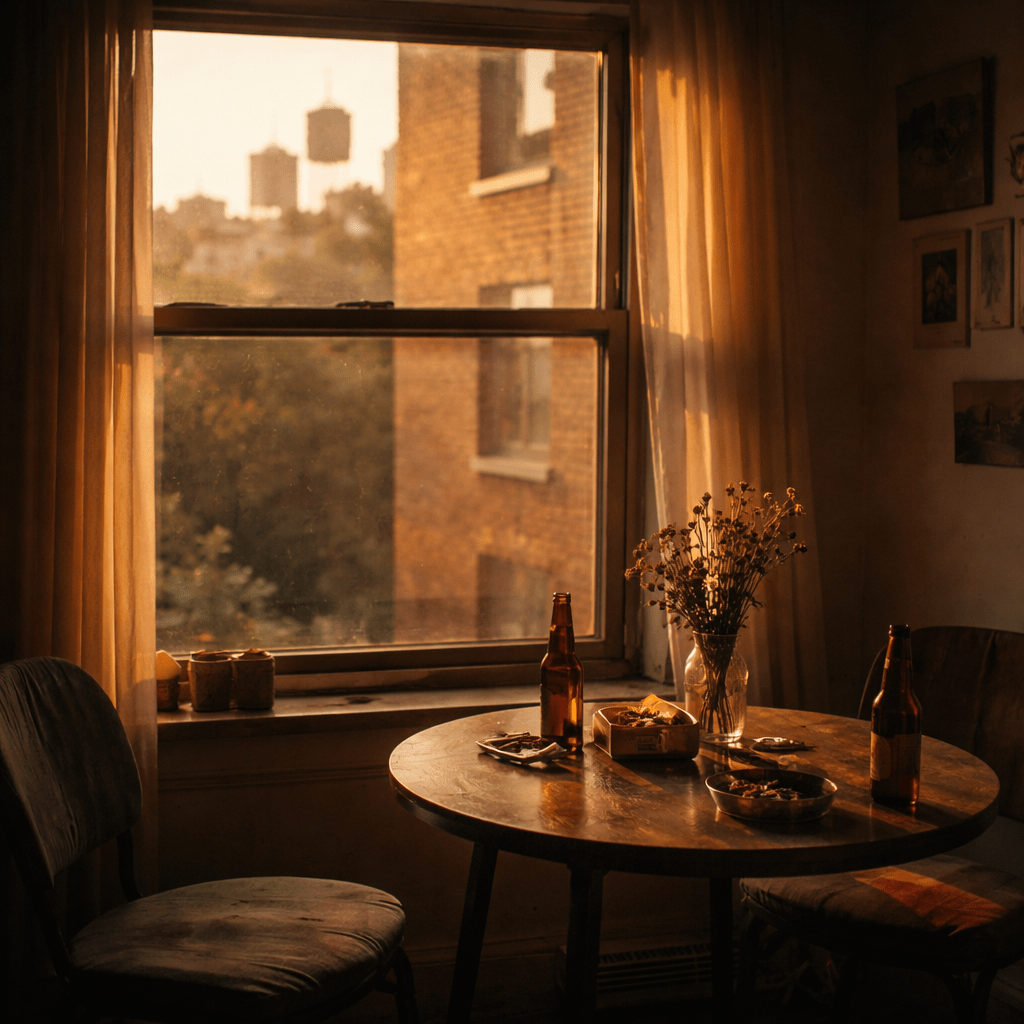
So while Manzoor was away, impulsively, I packed my few belongings, met Joe downstairs and off we went to look at hues of sunset off the brick wall out his kitchen window. 

Joe, to his credit, not even once tried to force things between us; we just settled in like two old beer guzzling buddies while I fantasized of Rita’s fragrance and how it would all be like. 

We found a rhythm. It didn’t last.

Rita got fired for theft and I made an ass of myself by staging a ridiculous, pompous exit, right there in front of everyone. And within minutes, there was Joe running down Broadway: 

“Hey, hey, wait for mee!” as though unhinged.

What can I say, three clueless people just going about aimlessly. 

Not long after, we were behind.

Claire was ecstatic.

Rita soon asked me to move into her small apartment, much to the displeasure of her teenage son whose opinion was never even asked. 

We lasted ten years. 

Leaking Coconuts

Way Off

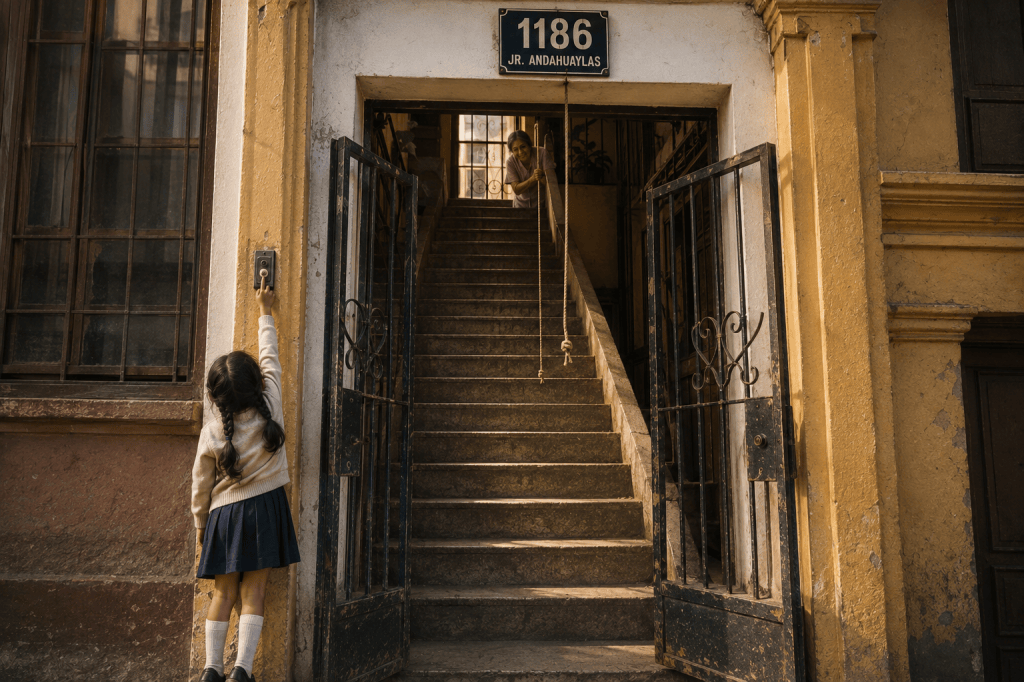
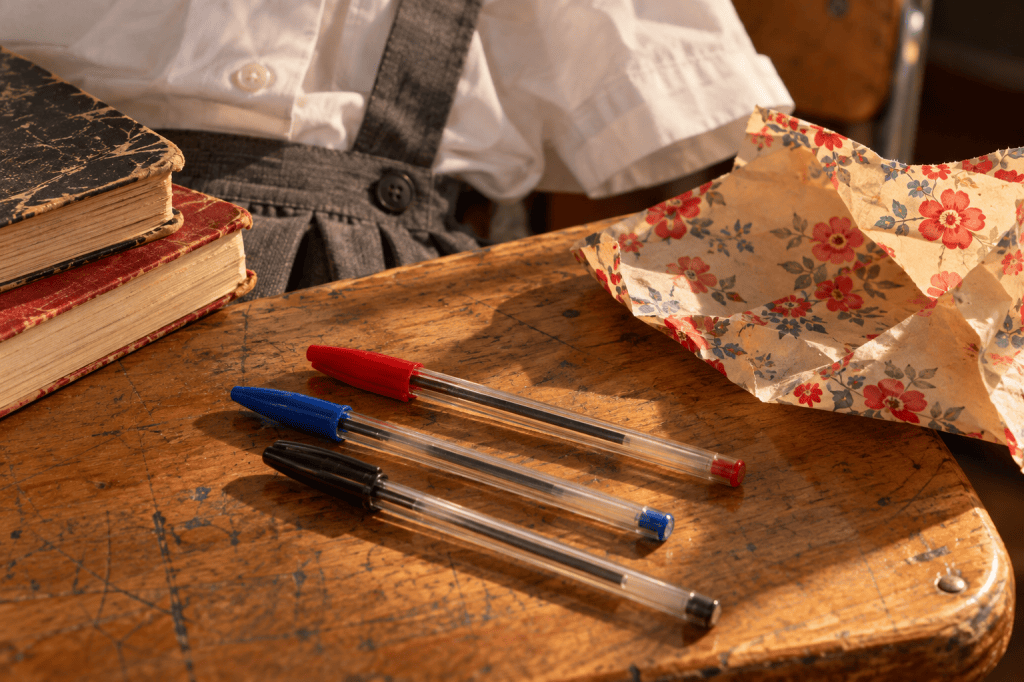
Mila was late to school again. It mortified her, having to knock on the front entrance of the director’s office. Tuition was probably late again, and old Ms. Blanco liked to send teachers into the classroom to remind her, right in front of all the other girls. Mila had learned to spot them ahead of time so she could run and hide in the bathroom.

“I’ll just say my dad dropped me off at the wrong spot. Or that the bus broke down… even better: it’s part of my new exercise regimen, and I intended to miss my stop or…”

She missed her stop by a couple blocks. Again.

She wasn’t late often, just enough to feel it. Especially after switching to the public bus at eight, no more pre-class fun with friends who rode to school on the yellow bus. 

There was that one time, though. Mila missed her stop, got off at the next one, and sat on a bench to, what else, come up with something clever to say.

That’s when a teacher from the school spotted her, scooped her up, and drove her straight to the dreaded director’s office.

“I found this girl by the shopping center, way past the park, ” Ms. Duran reported. “Imagine, had it not been for me, no telling where she’d have ended up!”

Mila had been sitting on a bench at a bus stop four blocks away. She didn’t even know where the mall was.

No one asked her a single question. Just condescending looks. She was never late after that, afraid Ms. Duran might find her again and make up something worse.

“It’d sure be easier if I could still ride the yellow bus,” Mila thought. Her parents couldn’t afford the service past first grade, so by eight or nine, the girl had no choice but to take the public bus to school. 

“Dad says we’re saving to donate more to the poor…”