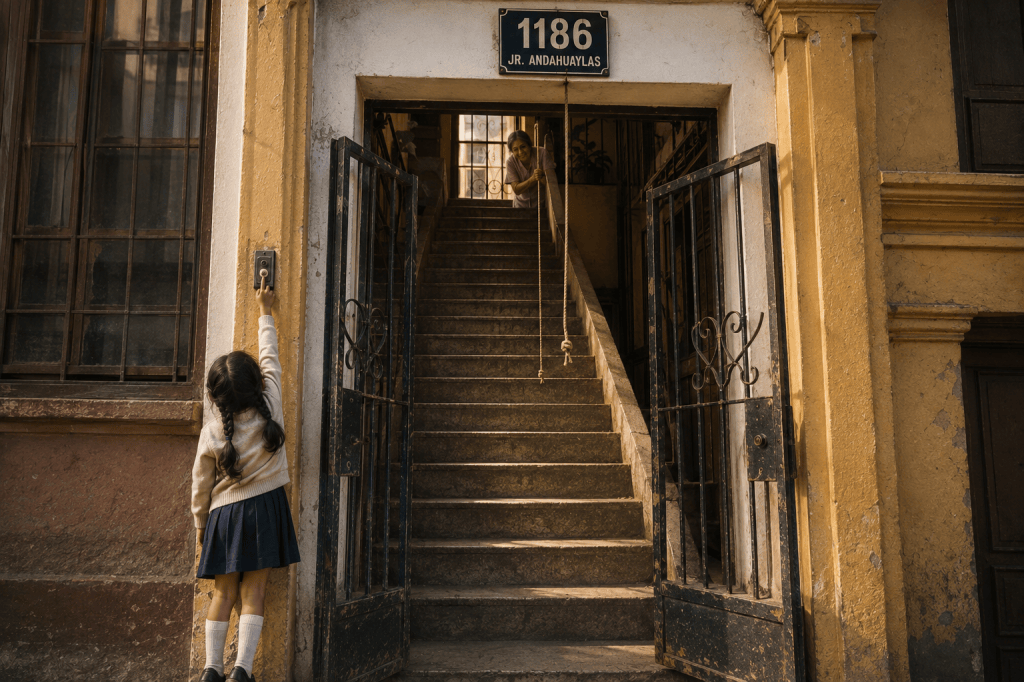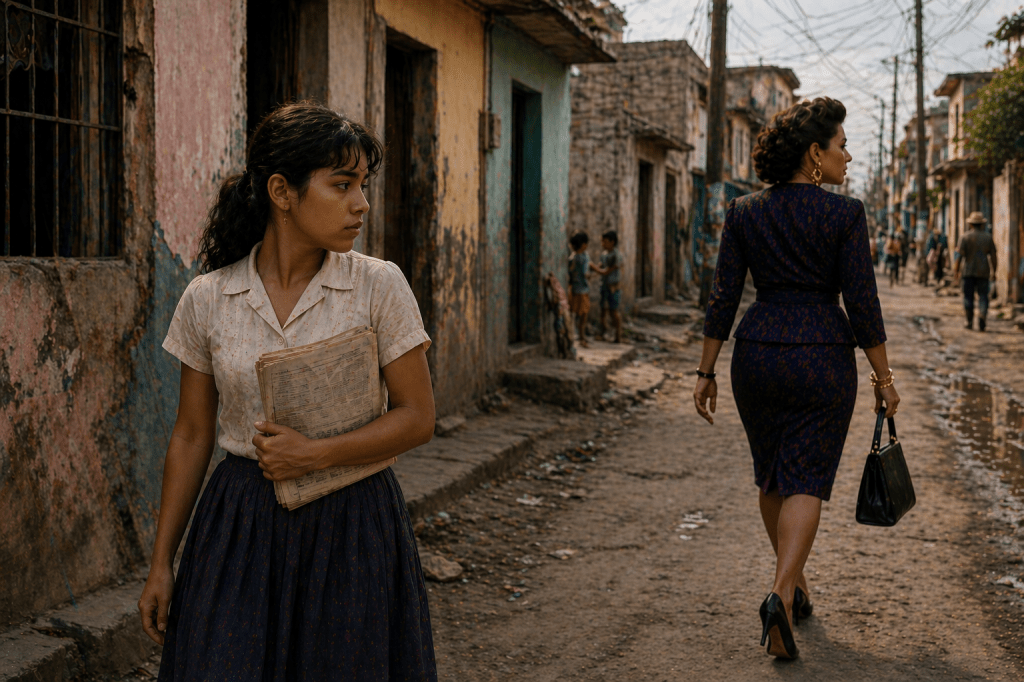
It was a school day. There was barely any cash, so most days I either had to walk or sneak through the back door of a bus.
We had been staying at Dora’s house, well into the better part of town.
“This is just temporary for Mila, this shit school—we might see the principal out here sweeping the sidewalk,” I heard my father say from the front seat.
Dora smiled. Never an unkind word from her.
She had graciously driven me to the very front of the school.
She had a daughter named Elena, about my age. Predictably, I thought of myself as not only an adult stuck in a child’s body, but also an intellectual, busy with the scholarly pursuits of my own mind.
Years later, I realized Dora was my father’s love interest. She was, factually speaking, his mistress, since he and Julia were emotionally, but not legally, divorced.
None of that mattered to me. I was thrilled my father was there to see me off, that Dora had a fancy car and all. The visual fit the yarn I had spun at the rejects’ school.
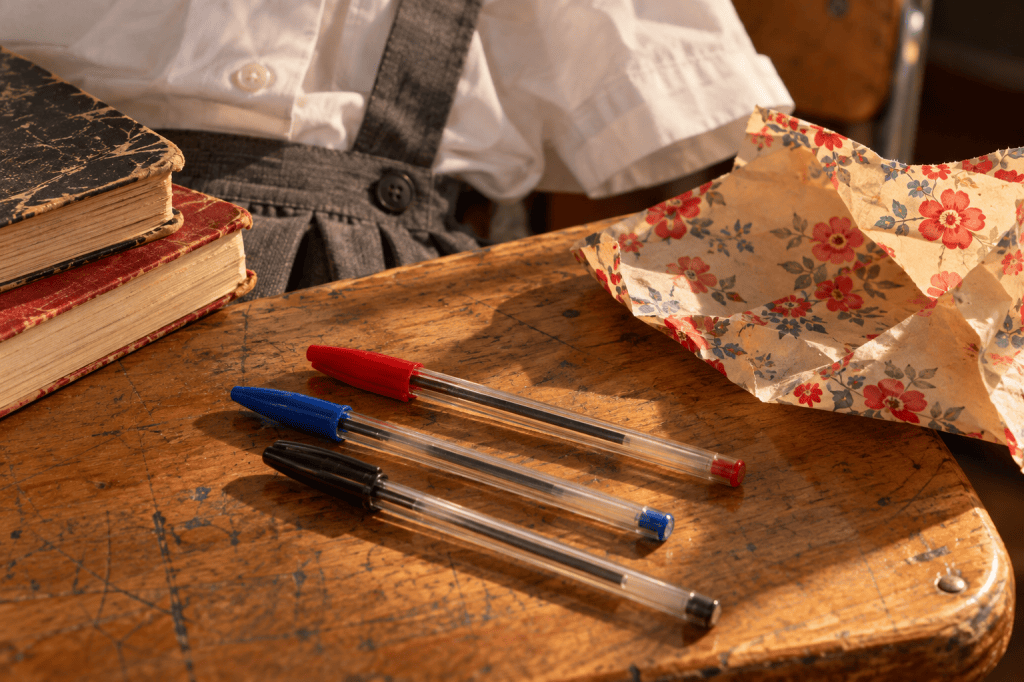
And I had my BIC pens.
I’d discovered them at the Chinese bodega where I bought cookies by the pound.
Shiny new BIC pens, right there under the glass counter. Dark blue, with a cap that covered nearly half the pen. You had to pull it off and slide it over the other end to reveal the clear plastic barrel and ink stick inside.
Nothing fancy. But to me, they were beautiful.
A red one, too, sometimes, whenever I had a bit extra.
And since I had to wear that hideous uniform—a gray skirt with suspenders over a white blouse—I might as well show off my BICs, clipped right into my blouse pocket.
I felt like the Hemingway among all the kids in the rejects’ school.
I was bilingual, too, which naturally placed me among the more distinguished scholars in their midst.
Nobody ever commented on my pens. I attributed this to their inability to approach someone of my obvious sophistication.
I once saved enough money to surprise Julia for her birthday. I went straight to the Chinese bodega and bought three BIC pens, one each in blue, red, and black.
Three!
I didn’t even have three for myself.
I asked the Chinese man behind the counter if he could wrap them. He reached under the counter, produced a square of wrapping paper from somewhere, and rather quickly wrapped my little gift.
It wasn’t particularly neat, but it was nice of him to do it.
I can still see myself, almost skipping with excitement, carrying those three pens I would have loved to own myself.
Julia was sitting at a table when I presented her with the somewhat haphazardly wrapped package.
“¿Y esto?”
I was certain she would be overwhelmed by such a thoughtful gift. Perhaps even faint.
She opened it.
“Ahh, lapiceros. Gracias.”
She smiled wryly.
I knew that grimace.
I wanted the floor to cave in and swallow me whole. I had been so proud of those pens, so certain she’d appreciate them.
“Mila showed up with her gift, pens”
I felt humiliated.
That was the day I found out the BICs were nothing but cheap plastic pens.
Later, I plotted to steal them back.
I was certain THREE BIC pens, prominently displayed in my blouse pocket, would impress those school kids awash in ignorance and inferior writing instruments.
But I never found them.
I would love to have one now.