

At the Salaverry house, Mila was sometimes allowed to share Mercedes’s room, though Mercedes made her dissatisfaction known. She had misgivings about the child.
Rock music would blast from Mercedes’s room. Then she’d appear nonchalantly where Mila was minding her own business.
“You can come in, if you want.”
Those rare invitations into Mercedes’s private space felt almost unguarded. The Beatles played loud as she flipped through her prized collection of fan magazines.
The nostalgia of dusk brings those moments back now, their significance only recently understood.
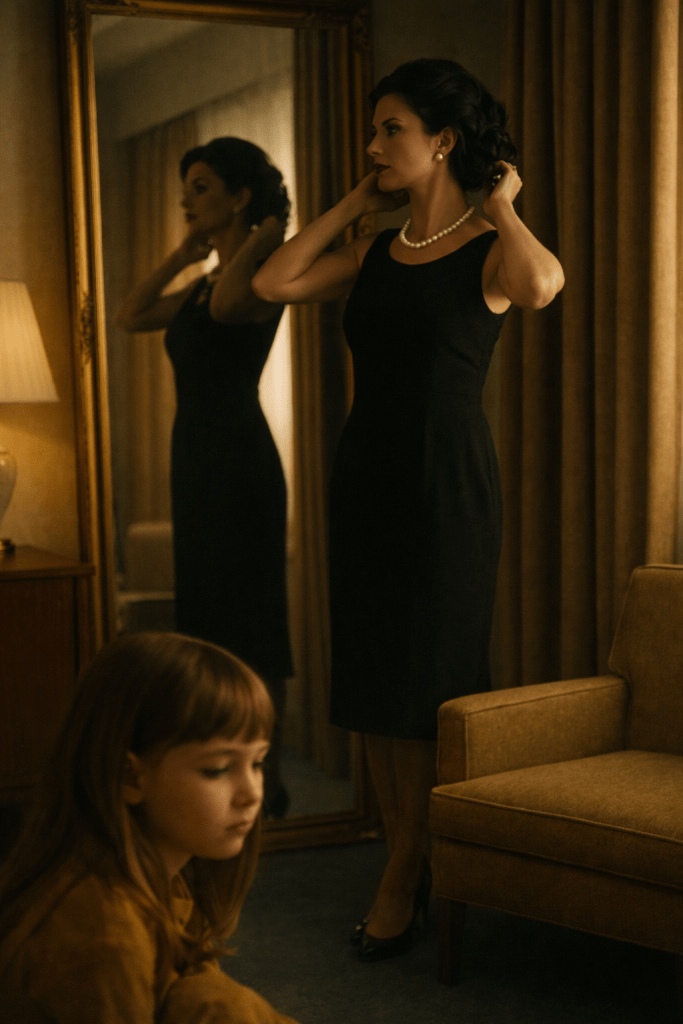
Mercedes had an innate ability to draw women whose forms seemed almost ethereal. She would spend hours alone with all sorts of pencils, charcoal, ordinary pencils, whatever she had, always drawing women’s faces with a variety of expressions, women in flowing gowns that seemed to move, on sketch pads, notebooks.
One afternoon, right after coming home from school, Mila heard a terrifying scream followed by a terrible crashing sound.
It was the first and only time Mila ever saw Juana sob.
Julia had taken Mercedes’s entire collection of magazines and thrown them all out.
Mercedes crashed every dinner dish in the bathtub.
Of course, the story was revised afterward. Then it became that Mercedes had gone off in a rampage. The magazines, supposedly, had taken up too much space.
After that dramatic episode, Mercedes was observed rather than seen.
Mercedes and Mila were never close. There were a few years between them, and by the time Mila was placed at Salaverry, Mercedes was almost a teenager.
Still, they both existed in the same sick environment where Julia ruled, and where girls were treated as more of a nuisance than anything else.
***
Years passed. In time, Julia rented an apartment in Queens and allowed both Mercedes and Stuardo to move in with her, apparently on the premise that they would eventually split expenses with her.
Stuardo seemed absent. He began speaking of delusions. He often smoked, drank to excess, and had started acting erratically in the community.
Mila offered to take him to a local psychiatrist, chosen right out of the Yellow Pages.
“What did the doctor say?” Julia asked anxiously.
“That Stuardo has schizophrenia. He’s got to be on medication from now on.”
As dry as it sounds, that was the extent of it.
***
Jobs didn’t always come easily for Mercedes, whether factory work or part-time hours at the mall. She held on to the Alexander’s job the longest.
She became Stuardo’s caretaker.
After a few years of watching over him, Mercedes sought mental health services. What no one spoke of was the tremendous toll that sitting all day in the apartment with Stuardo had taken on her.
The story got edited to shame Mercedes for seeking help.
And wasn’t she lucky to have a place to live?
Mercedes was used by Julia as a caretaker for Stuardo for about twenty years, then discarded when she was no longer needed, just when Mercedes herself needed a hand.
Not that anyone ever admitted it.
That is how Mercedes’s whole persona disappeared into one billable psychiatric label and endless medications.
“Yeah, I told you, she’s always been weird,” Julia would comment to whoever asked.
Mila was in her own turmoil by then, descending further into addiction. In between binges, she clipped a few classified ads to encourage Mercedes to look for her own space.
“Listen, Mila, we buy The New York Times here, so don’t send me any more clippings,” Mercedes said hastily, almost offended.
And not long after came Julia’s warning:
“Stop telling her she could rent an apartment on her own. She might end up believing you!”
Two decades went by. Julia retired, got a mortgage, and moved them all into a house in Hartford.
The Apophis-approved tenants didn’t pan out. Julia grew desperate.
In short order, Julia sold the house, made a financial agreement, and moved to New Jersey.
The agreement did not include Mercedes.
Julia told her to leave.
Next thing she knew, after twenty years as an unpaid caretaker, Mercedes was on her own.
Her mental health began to spiral, yet she still managed to find services. She rented rooms at the Y. Eventually, she was referred to a subsidized housing program, which led to a studio.
A relapse led to conservatorship and, subsequently, placement in a facility.
***
Years later, Mila understood something she could not have known as a child: not being invited into Julia’s household may have saved her.
As a young woman, she had wished to belong there, or at least to be allowed to stay. But looking back at Mercedes and Stuardo, she saw the bargain more clearly.
Julia did not offer shelter.
She assigned roles.
Stuardo was protected.
Mercedes was used to protect him.
And when Mercedes herself needed protection, there was no role left for her.
The girl who drew women who seemed to float right off the paper.
Julia made sure she went nowhere.
 theleakingcoconuts.com