The Julia Series

The Return

During one of Julia’s visits to her eldest in Baltimore, we got an eviction notice. Father thought it best to leave discreetly in the middle of the night.

From the marble phone stand to the broken chair to wool blankets used as luggage, things got progressively worse.

We moved into a smaller but modern house in an upscale neighborhood near the beach. Without a penny to our name. 

Then a cheap two-bedroom in a “commercial” area. It was in that building that Mila came home from school to find everything out in the hallway, the refrigerator, the only table, all of it on display for strangers to gawk at.

Julia returned, business as usual. 

Not long after that, they moved into a large condominium in an elegant building: two units to a floor, servant’s entrance and exit, window walls.

“Just say we’re very selective about window treatments. It takes time when they’re coming from Europe…”

A glass house. You adapt.

One bright afternoon, Julia asked Mila, dryly: “And you, do you want to go to the United States?” 

Dad, sitting nearby, said nothing. 

“Yes, it’d be fine…” Mila answered nonchalantly, hiding her shock

It was, of course, her father who got the airplane tickets. Mila stayed with the older sister in Baltimore for just under two years. Julia visited at least once. On his dime. 

Some documentation error, presumably, was the reason the girl was put on the next flight back south. 

When Mila landed, no one was there waiting for her. She found a bus to a relative’s house, and from there called an aunt, who drove her to the street where she’d been told her parents and brothers lived.

“Look, my dear, I’d have to make too many turns to get to the house, you can just walk a straight line from here,” she said, pointing to a narrow, residential street. 

“They live at the end of it, on this side.”

And off the girl went, in the new orange turtleneck she’d managed to buy with babysitting money, not expecting a thing. Soon she spotted two vaguely familiar figures walking toward her along the same side of the street.

“Mila? Oh wow, it is you!” Julia offered a shallow hug, as usual, then mumbled something about a miscommunication over the flight delay.

“You’ve turned into a young woman,” said Apophis, leering at the girl’s emerging breasts. He had not changed. Julia said nothing. 

The orange mock turtleneck lingers somewhere in her mind to this day. 

There was no one to tell her the sweater had nothing to do with it. 

In the short time Mila had been away, they’d gone from the posh glass house into a series of progressively worse rented rooms. Mila found them in a corner house that had seen far better days.

It was a far cry from the days of drawn curtains.
The Julia Series

Dressed as Glamour

The clacking sound of high heels striking the floor still stirs something tangled in me, even if only for a second or two. I feared her. Still, I remember feeling a small, shameful pride when she dressed up, hair set just so, red lipstick, all of it in place.

She had the kind of arrogance a child could mistake for glamour.
And there was something almost amusing about it.

Clickety-clack clack…

On a good day, it preceded ice-cold silent stares.

Julia was one of Rosa’s first four children. Rosa, a young mestiza woman with little to her name, still managed to provide a home. Two more children came after that, and Julia, already ashamed of who and where she came from, hurried toward work and toward men she thought might offer a way up.

Two men seemed to offer escape. One belonged to a wealthy family. The other, Fernando, was a handsome thirty-year-old from a family whose money had faded, though its name still carried itself like royalty.

Three years later, in some remote town up north, Julia gave birth to a girl.

Gustavo came to see her soon after, carrying what her sister would remember decades later as “the largest, most beautiful roses I’d ever seen.” It made such an impression that she remembered it all those years later. Julia never mentioned it at all.

She went on to have three more babies within five years. Five years after that, another pregnancy. By then, Fernando had succumbed to her insistence and married her, much to the dismay of his parents.

For reasons never spoken aloud, Julia made sure the girl knew she had never been wanted.

Mila was Julia’s last child. When she was born, Julia had pneumonia, so Rosa took the baby home. Five years later, unexpectedly, Julia pulled the girl out of Rosa’s house and into the old one where they all lived on the bare minimum.

Other than sliced bread, margarine and canned milk, there was no food. I recall them referring to days without food as detoxification, half jokingly. 

It went on until our father either borrowed money from a friend or got food on credit. He would come in late at night, intoxicated, carrying bags of takeout.

“Wake up, Mila, come to eat…” one of the older siblings would say.

Both Julia and Dad enjoyed pretense. They sent their children to private schools even when they could not pay for things like First Communion gowns, field trips, or tuition. Three of the children eventually dropped out.

Mila was shuffled from one pretentious school to another.

We were told never to open the living room windows, lest someone notice how bare the room was: an ornate mahogany chair with half its back torn off. The front door had to be opened just so, too. The foyer held nothing but a telephone on a marble table.

“Your daughter has a beautiful voice,” one of the nuns had said of the eldest. Julia pressured her husband to come up with at least the tickets to send her to a well-known music school.

He got them airplane tickets. On credit.

They had heard it was freezing up here, so they arrived with two large bundles made of wool blankets. That was the luggage.

Julia went back and forth many times after that. On his dime. Each return announced itself the same way: heels on the floor, lipstick in place, damage entering dressed as glamour.

And to Mila, her arrivals brought both awe and dread.

Leaking Coconuts

Way Off

Mila was late to school again. It mortified her, having to knock on the front entrance of the director’s office. Tuition was probably late again, and old Ms. Blanco liked to send teachers into the classroom to remind her, right in front of all the other girls. Mila had learned to spot them ahead of time so she could run and hide in the bathroom.

“I’ll just say my dad dropped me off at the wrong spot. Or that the bus broke down… even better: it’s part of my new exercise regimen, and I intended to miss my stop or…”

She missed her stop by a couple blocks. Again.

She wasn’t late often, just enough to feel it. Especially after switching to the public bus at eight, no more pre-class fun with friends who rode to school on the yellow bus. 

There was that one time, though. Mila missed her stop, got off at the next one, and sat on a bench to, what else, come up with something clever to say.

That’s when a teacher from the school spotted her, scooped her up, and drove her straight to the dreaded director’s office.

“I found this girl by the shopping center, way past the park, ” Ms. Duran reported. “Imagine, had it not been for me, no telling where she’d have ended up!”

Mila had been sitting on a bench at a bus stop four blocks away. She didn’t even know where the mall was.

No one asked her a single question. Just condescending looks. She was never late after that, afraid Ms. Duran might find her again and make up something worse.

“It’d sure be easier if I could still ride the yellow bus,” Mila thought. Her parents couldn’t afford the service past first grade, so by eight or nine, the girl had no choice but to take the public bus to school. 

“Dad says we’re saving to donate more to the poor…”

Leaking Coconuts

The Portrait

“I know what it needs,” Julia said excitedly, then hurried to the bedroom and came right back out, clutching a pearl necklace.

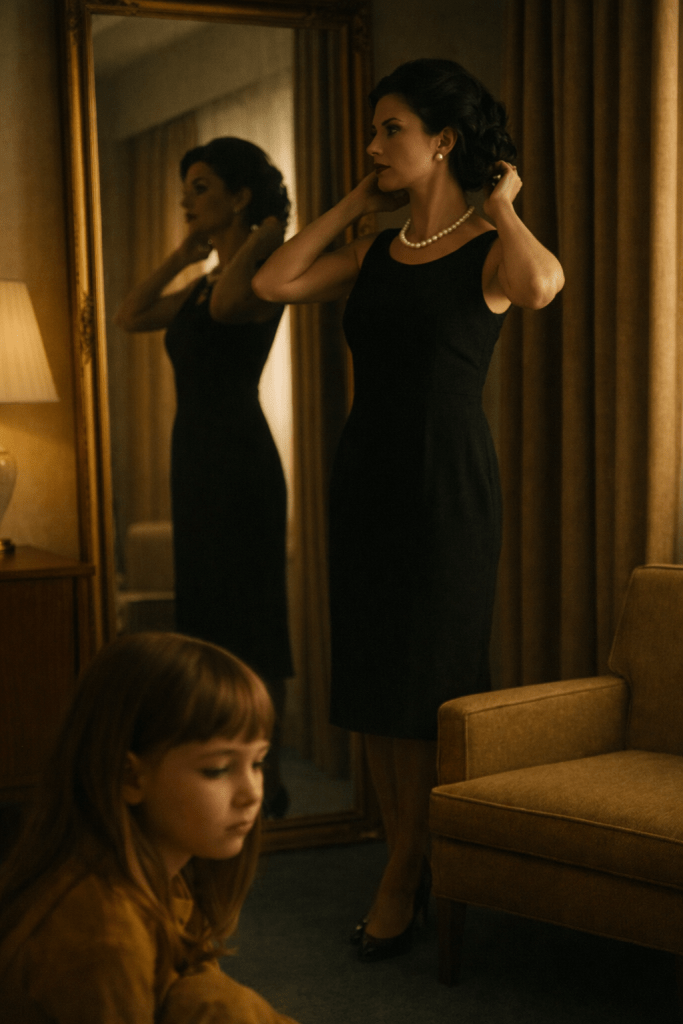
She stood before the large mirror, adding final touches to her hair as she hummed a bolero.

Mila crouched on the floor, unseen, peeling a tangerine as she watched in awe. To her, Mom looked like a movie star.

A nationally known painter had been hired to do a portrait of her. She had never been wealthy but, after a couple of her husband’s commercial deals came through, she suddenly saw herself as Madame Bovary.

“She doesn’t even know I’m here,” Mila whispered. “She forgot all about me.”

She ran to the kitchen for another tangerine, then headed upstairs to sit cross-legged on the floor and watch The Flintstones.

The painting, in an ornate golden frame, hung proudly in the living room, until they could no longer keep the house.

Not long after, Mila saw it again, propped against a wall in some nondescript back room, surrounded by everything else they owned.

They’d been thrown out, bougie frame and all.

Leaking Coconuts

Taste Test

The old house had an open-air courtyard and, as usual, Mila was milling about with the same empty cardboard box which she liked to put over her head. It was her space, her way of dealing with people she did not know and did not want to be with. Lost in another daydream, she heard her father’s voice: 

“Mila, come taste this new, improved way of making us mashed potatoes!” 

His tweak to improve a humble bowl of mashed potatoes? Mash them in a blender. 

It had turned into a gummy paste, quite unappetizing. 

“Oh, it’s good, Dad, I like it!” She could not bear to tell him. She quickly retreats back into the cardboard box, embarrassed for both. 

As he walked back into the kitchen, the child heard him say, almost imperceptively: 

“This tastes like shit…she didn’t want to hurt my feelings.” 

She lifted the box slightly above her eyes and kept watching until the hallway swallowed him, then pulled the box back down over her eyes. 

Leaking Coconuts

Ropero

On Sundays, they gathered. The place was cramped, never fancy, except for her old “real wood” furniture and that ropero, her secret altar. Inside, neatly folded linens she barely used, reserved for special occasions. Bottles of perfume, half evaporated, some in their original boxes. Jewelry that, surprisingly, was not fake but rather old, striking jewelry pieces she had gracefully accepted from the many suitors of yesteryear.

I’d sneak a peek now and then, but she never let me hold any of her things.

One day, I took something, out of sheer curiosity and to take to school the next day. Not out of need, not even desire, I just wanted to hold something of hers and, yes, show it at school. It was a thin, gold chain. I just grabbed it, unaware of its significance.

Some relatives were visiting and they all tended to linger in the bedroom where I was, transfixed. The chain had crumpled into a knot and, panicked, I imperceptibly dropped it into a glass jar nearby, coughing nervously to cover what I was sure would cause an earsplitting noise.

“No one noticed. I’m good,” I reassured myself, a bit shaken.

Half hour passed.
“Mila, come to the kitchen at once!”

She was standing near that huge, cheap wall calendar.
April: Grand Canyon National Park.

There’s a place grandmother could not even fathom.

The glass jar sat on the kitchen table.

Leaking Coconuts

The window and the necklace

The window fell shut and the necklace went with it.

How, you ask? Well, it was old and had to be propped with a stick to stay even half open. The rotted stick gave way and, in my haste, I either tried to hold it or it was too heavy; the necklace, a cheap little thing I’d bought myself from the corner store, somehow got caught in the mess.

Its charms scattered across the kitchen floor like crumbs from a careless hand.

In the process, I scraped bits of skin from my hand and wrist, but stood there nonchalant as I started to peel the loose edges away.

Just act as if nothing happened.
Hum to old boleros no one knows you love.
Just act as if…

Leaking Coconuts

I Got You

The kitchen window is cracked, the one that looks out on the small backyard where the child spends hours.

“She’s going to think it was me. Maybe she won’t let me be out here again.”

The girl turns away from it, worried. Her eyes search the mid-space between fence and cloud.

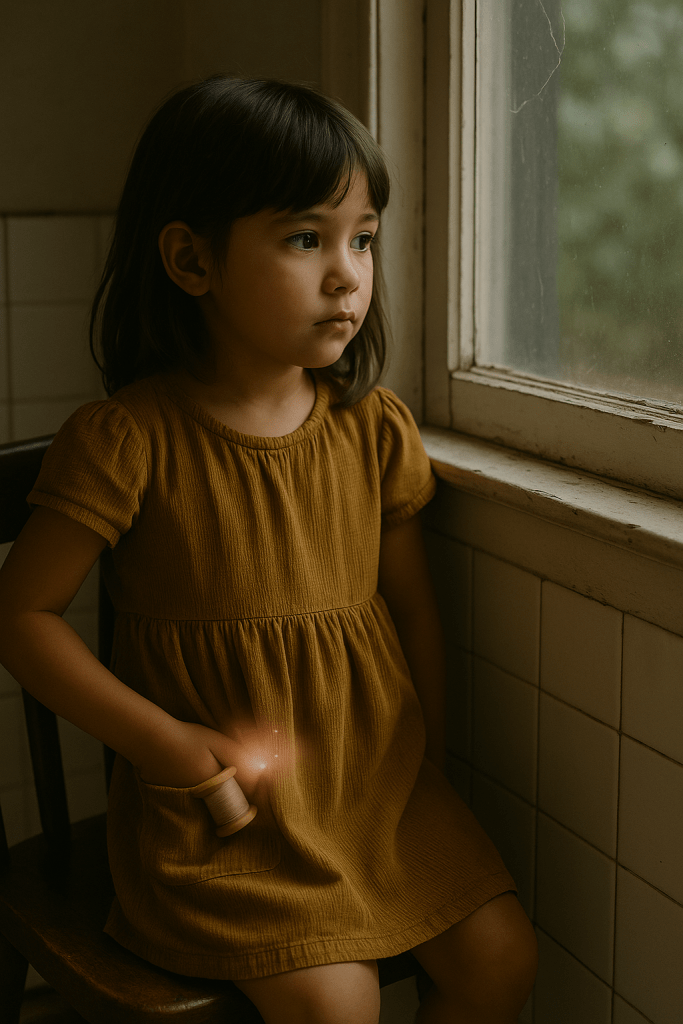
Instinctively, she cups the wooden spool inside her pocket so no one will notice. There’s never anyone around — it’s just habit, this downplaying of her natural tendencies.

“I got you,” she whispers.

Leaking Coconuts

Rosa H.


Some women raise children because they’re expected to. Others do it because they choose to. Rosa chose me. She wasn’t my mother by blood, but she was the one who fed me, bathed me, held me and filled our home with the scent of comfort. I never told her what she meant to me. This is my way of doing that now.


It was the early 1900s in a remote southern town. Rosa was barely a teenager when she was sent to the city to work as a maid. Presumably, her family had sent her away to support herself or perhaps she ran off; either way, no one came looking, no one ever said a word.

How Rosa survived in that new environment was never discussed. But what did happen, what changed everything, really, was that while working as a domestic servant, she became pregnant by the employers’ son, Alejandro, most likely the result of abuse. She would go on to have three more children by him. Somehow, Rosa managed to settle into a second floor walk-up and sustain a modest, stable home for herself and, eventually, six children.

I’m not sure I would’ve done any better under the same circumstances.

By the time Rosa took me in, only her youngest daughter, Virginia, remained in the apartment. Virginia doted on me too and, as a 25-year-old unmarried woman, she began to see me as her daughter.

It was both of these women who cared for me, practically from birth through the first five years of my current lifetime. Rosa was the one who did the hard parts: the diapering, the feeding, the night wakings. She didn’t hesitate. She simply took me into her home and into her heart.

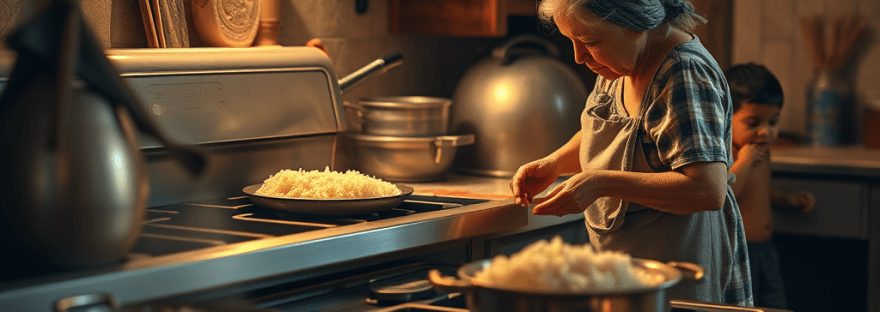
She was also a good cook, nothing fancy, just nourishing, comforting food made with care. By eleven in the morning, the whole apartment would be filled with the scent of something delicious: potatoes, rice, maybe quinoa. To this day, when I think of comfort food, I think of Rosa. That smell meant love, it meant home.

The first life altering moment I can remember was the day I was taken from Rosa. No warning. No explanation, just removed and placed in the “family” home.

No one ever thanked Rosa. I didn’t either. I was too small to understand what she had given me.

This is me saying it now, mamama. You were my mother. You chose me. And I miss you.

Leaking Coconuts

795 Inambari

Her right hand gently poured warm water over my chest, while her left cradled my head just above the surface. It was daytime. A soft breeze floated in from the open balcony door behind me.

The woman I looked at as she bathed me was my grandmother. Her name was Rosa. Had it not been for her, I likely wouldn’t have survived the first few days of my life.

The warmth of the water in her hand, the way it touched my skin, felt like floating in pure trust, in love. A knowing I still cannot verbalize.

This is the first recollection of my life, one of only a handful of memories that still fill me with a profound sense of belonging, of being safe. I see the metal tub, placed carefully between two of her wooden chairs. I feel the warm water on my chest. I remember perceivig a kindness as she looked at me, a baby she had chosen to look after despite economic hardship and other struggles.

That memory stands in stark contrast to what came after. But for a brief, golden time, I was the apple of someone’s eye.

And I never thanked her.

Not with words.
Not with time.
Not before she was gone.

I carry that now.