Reflections

Almost Funny

I never once saw him angry.

Not really angry.

Not the way Julia got angry.

Her insults came easily, sometimes within earshot of the children, sometimes loud enough for the neighbors, and maybe even for innocent passersby who had only meant to walk down the street and got an earful.

It was always one of those he makes me lose it situations.

As if he had forced her hand.

As if his very existence had reached across the room and shaken her into cruelty.

“Look at you, you klutz. All you’re good for is writing stories about nothing. Still editing that damn book?”

That damn book was El Espejo.

When his novel piqued the interest of a movie producer, Fernando was happy. Proud, even. He told people. There had been an offer, a conversation, even a tentative new title.

Julia laughed.

“Wonder if it’s even true.”

It was true.

The film never happened. The deal fell apart somewhere, as things often do. But the offer had been real.

So was the book.

So was the man she constantly mocked.


Once, she chased him through the house with one of her heels in hand.

A heel.

Not a slipper. Not a rolling pin, which at least would have had some old comedic dignity.

A heel.

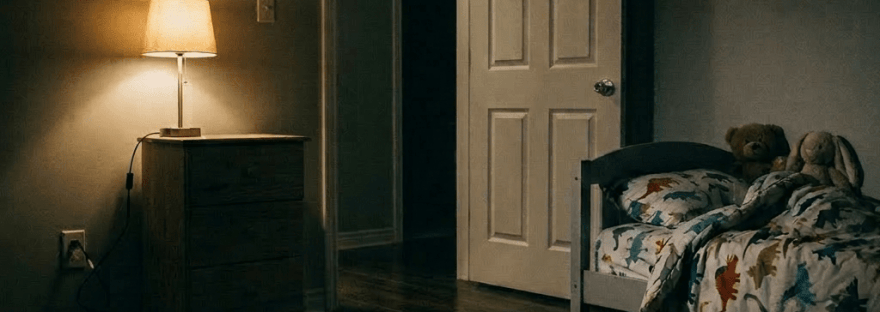
She chased him right into Mila’s bed.

Mila did what children do in ridiculous emergencies.

She pretended to be asleep.

Years later, the memory does seem rather comical from a distance: Fernando ducking, Julia storming behind him, heel raised as if it were just another prop in the tragicomedy of their lives.

Almost.

Then the afterthought arrives.

There was a child in that bed.

Julia mocked him for years. Then she came to the United States and, once here, behaved as if he had never existed.

Three years later, Fernando died.

“I am his widow now,” she said. “I’m a widow.”

The word seemed to please her.

Not the loss.

The title.

***

I never once saw him lose his temper with her. Never saw him raise a hand. Never heard him scream back. Once or twice, exasperation crossed his face, and he would quickly leave the room.

How did he manage that?

Outside the house, Julia performed the submissive wife.

Inside, she ruled with a heavy hand.

Yet Fernando remained calm.

Maybe calm was the only safe place left for him to stand.

***

As a child, Mila did not realize how grateful she would one day be that her father stayed in that house. 

Because as bad as things were, they never became what they might have become had he walked away.

A terrible kind of gratitude.

Still.

Thank you, father.

Reflections

Lumpy Beds and Other Luxuries

Last night I must’ve been half asleep when I started muttering about our bed, how that old, lumpy mattress would soon just kill my back dead. How is it that I still have this thing here?

The truth? I could’ve replaced it long ago. I could’ve upgraded the furniture, bought the better things. But I’ve never cared much for that kind of new. I’ve always preferred what’s stayed with me, the things that have weathered time alongside me.

And yes, the bed could use replacing. But here’s what I remembered, somewhere between half-sleep and gratitude: it wasn’t all that long ago that I was dozing off in laundromats, trying to stay warm in the dead of winter, or in emergency rooms, pretending to be someone’s family.

A spot on a lumpy bed, a blanket like the one my wife gave me, would’ve been heaven.

I don’t ever want to forget the long road that led me here, to the comforts of home and, yes, our old bed and the tender lives that came to rest beside it.

Remember where you came from.
And be gentle with where you are.

Leaking Coconuts

Rosa H.


Some women raise children because they’re expected to. Others do it because they choose to. Rosa chose me. She wasn’t my mother by blood, but she was the one who fed me, bathed me, held me and filled our home with the scent of comfort. I never told her what she meant to me. This is my way of doing that now.


It was the early 1900s in a remote southern town. Rosa was barely a teenager when she was sent to the city to work as a maid. Presumably, her family had sent her away to support herself or perhaps she ran off; either way, no one came looking, no one ever said a word.

How Rosa survived in that new environment was never discussed. But what did happen, what changed everything, really, was that while working as a domestic servant, she became pregnant by the employers’ son, Alejandro, most likely the result of abuse. She would go on to have three more children by him. Somehow, Rosa managed to settle into a second floor walk-up and sustain a modest, stable home for herself and, eventually, six children.

I’m not sure I would’ve done any better under the same circumstances.

By the time Rosa took me in, only her youngest daughter, Virginia, remained in the apartment. Virginia doted on me too and, as a 25-year-old unmarried woman, she began to see me as her daughter.

It was both of these women who cared for me, practically from birth through the first five years of my current lifetime. Rosa was the one who did the hard parts: the diapering, the feeding, the night wakings. She didn’t hesitate. She simply took me into her home and into her heart.

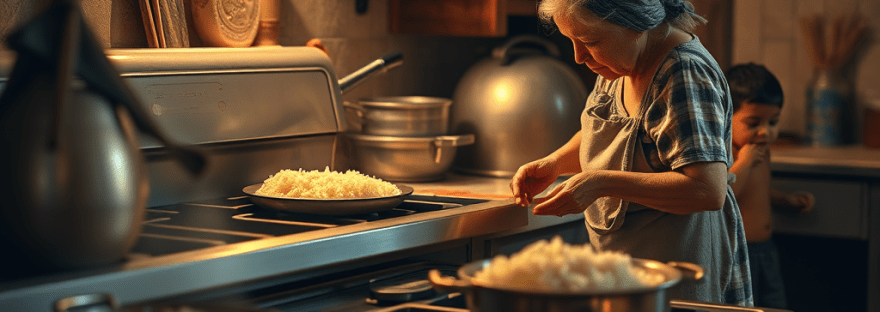
She was also a good cook, nothing fancy, just nourishing, comforting food made with care. By eleven in the morning, the whole apartment would be filled with the scent of something delicious: potatoes, rice, maybe quinoa. To this day, when I think of comfort food, I think of Rosa. That smell meant love, it meant home.

The first life altering moment I can remember was the day I was taken from Rosa. No warning. No explanation, just removed and placed in the “family” home.

No one ever thanked Rosa. I didn’t either. I was too small to understand what she had given me.

This is me saying it now, mamama. You were my mother. You chose me. And I miss you.