
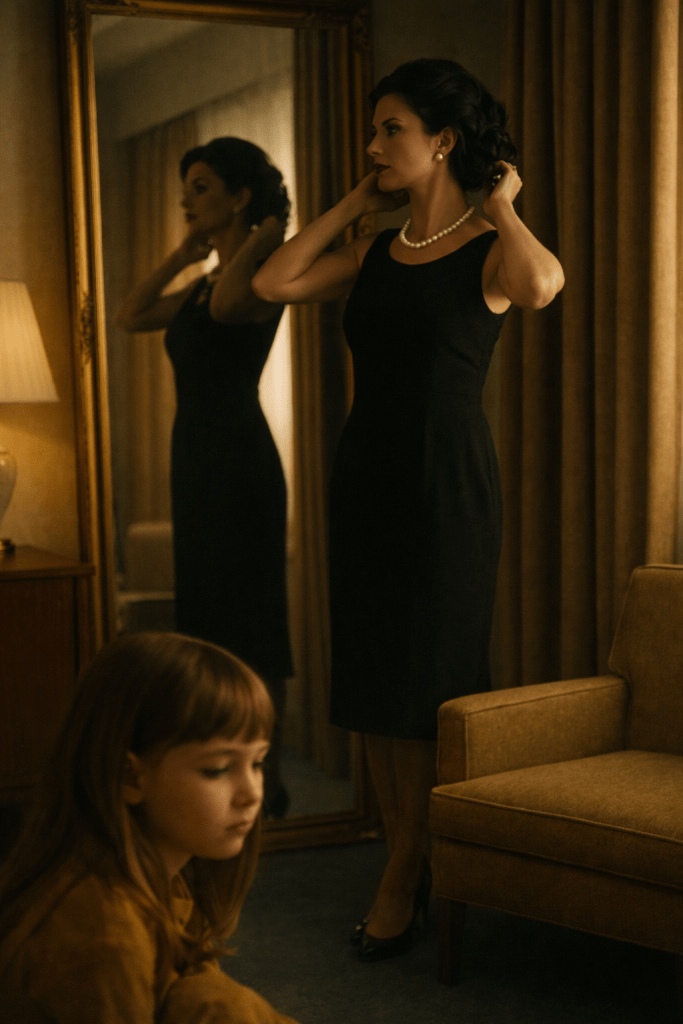
The clacking sound of high heels striking the floor still stirs something tangled in me, even if only for a second or two. I feared her. Still, I remember feeling a small, shameful pride when she dressed up, hair set just so, red lipstick, all of it in place.
She had the kind of arrogance a child could mistake for glamour.
And there was something almost amusing about it.
Clickety-clack clack…
On a good day, it preceded ice-cold silent stares.
Julia was one of Rosa’s first four children. Rosa, a young mestiza woman with little to her name, still managed to provide a home. Two more children came after that, and Julia, already ashamed of who and where she came from, hurried toward work and toward men she thought might offer a way up.
Two men seemed to offer escape. One belonged to a wealthy family. The other, Fernando, was a handsome thirty-year-old from a family whose money had faded, though its name still carried itself like royalty.
Three years later, in some remote town up north, Julia gave birth to a girl.
Gustavo came to see her soon after, carrying what her sister would remember decades later as “the largest, most beautiful roses I’d ever seen.” It made such an impression that she remembered it all those years later. Julia never mentioned it at all.
She went on to have three more babies within five years. Five years after that, another pregnancy. By then, Fernando had succumbed to her insistence and married her, much to the dismay of his parents.
For reasons never spoken aloud, Julia made sure the girl knew she had never been wanted.
Mila was Julia’s last child. When she was born, Julia had pneumonia, so Rosa took the baby home. Five years later, unexpectedly, Julia pulled the girl out of Rosa’s house and into the old one where they all lived on the bare minimum.
Other than sliced bread, margarine and canned milk, there was no food. I recall them referring to days without food as detoxification, half jokingly.
It went on until our father either borrowed money from a friend or got food on credit. He would come in late at night, intoxicated, carrying bags of takeout.
“Wake up, Mila, come to eat…” one of the older siblings would say.
Both Julia and Dad enjoyed pretense. They sent their children to private schools even when they could not pay for things like First Communion gowns, field trips, or tuition. Three of the children eventually dropped out. Mila was shuffled from bougie schools to pretentious neighborhood schools ones for rejects.
We were told never to open the living room windows, lest someone notice how bare the room was: an ornate mahogany chair with half its back torn off. The front door had to be opened just so, too. The foyer held nothing but a telephone on a marble table.
“Your daughter has a beautiful voice,” one of the nuns had said of the eldest. Julia pressured her husband to come up with at least the tickets to send her to a well-known music school.
He got them airplane tickets. On credit.
They had heard it was freezing up here, so they arrived with two large bundles made of wool blankets. That was the luggage.
Julia went back and forth many times after that. On his dime. Each return announced itself the same way: heels on the floor, lipstick in place, damage entering dressed as glamour.
And to Mila, her arrivals brought both awe and dread.
 theleakingcoconuts.com