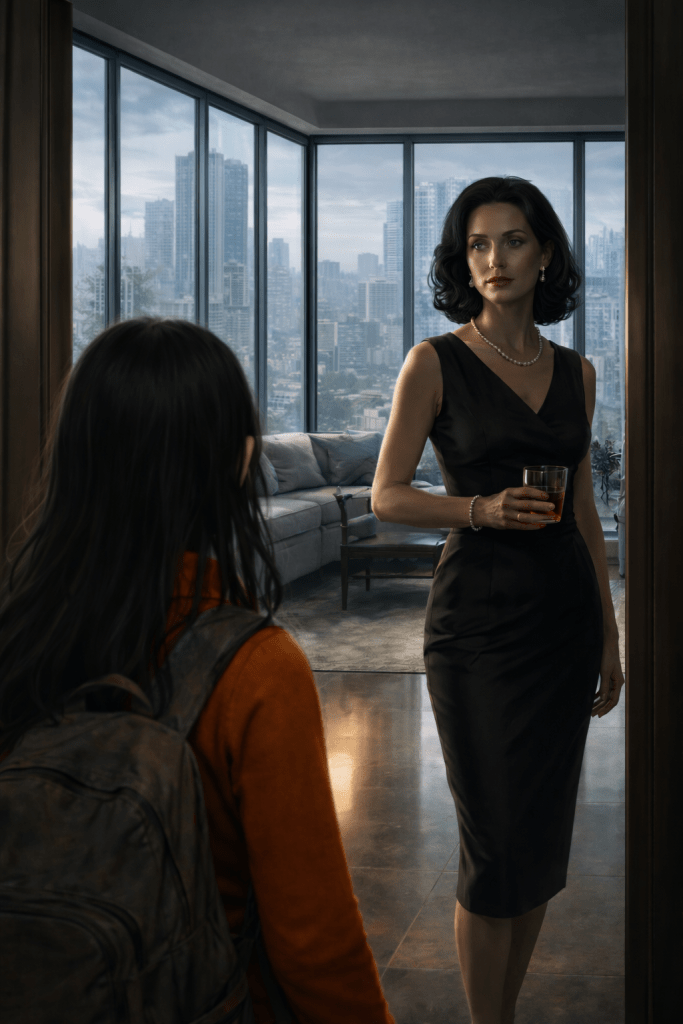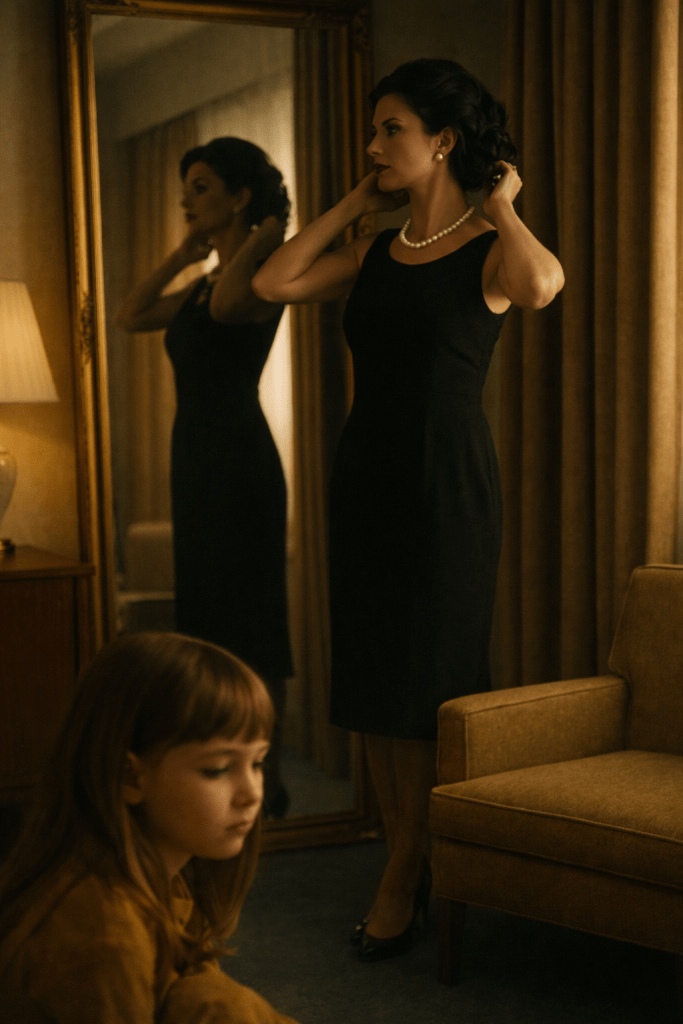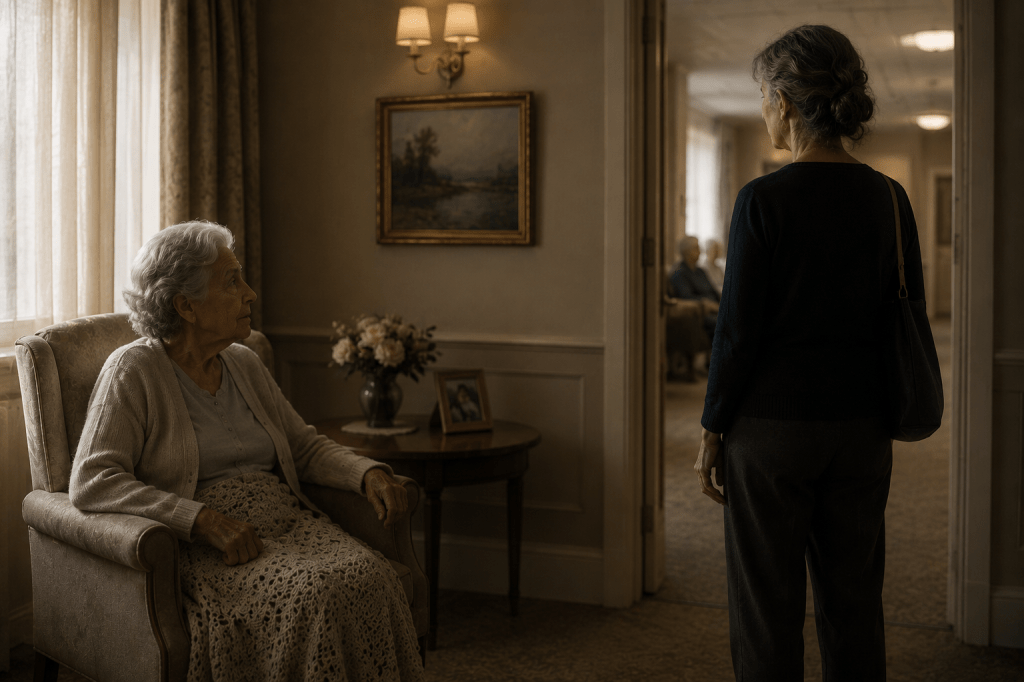
Reflections

Lumpy Beds and Other Luxuries

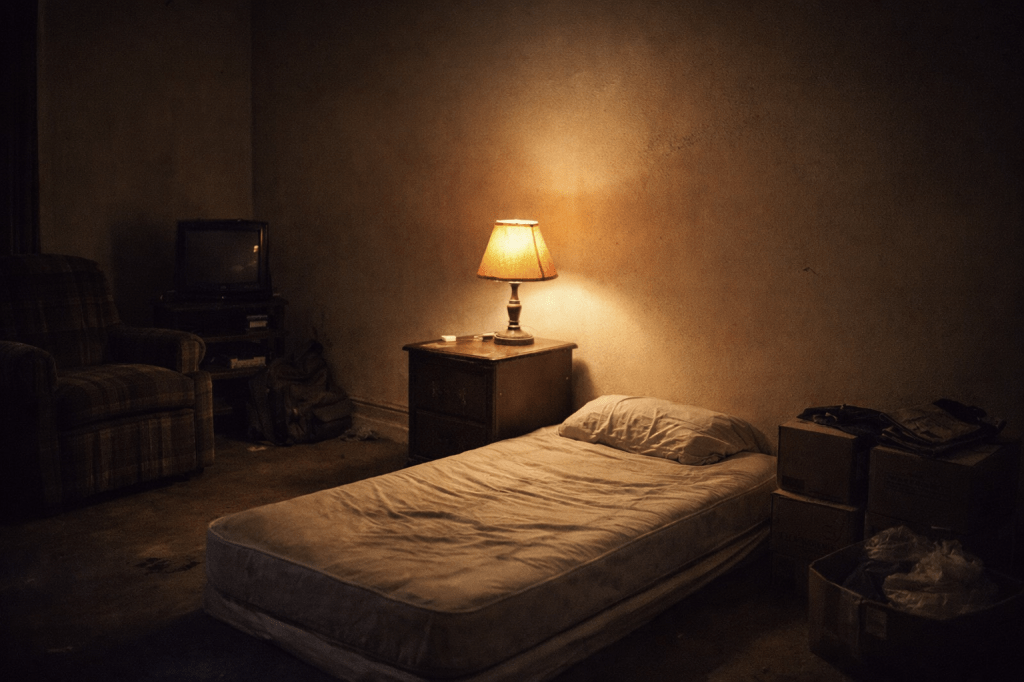
Last night I must’ve been half asleep when I started muttering about our bed, how that old, lumpy mattress would soon just kill my back dead. How is it that I still have this thing here?

The truth? I could’ve replaced it long ago. I could’ve upgraded the furniture, bought the better things. But I’ve never cared much for that kind of new. I’ve always preferred what’s stayed with me, the things that have weathered time alongside me.

And yes, the bed could use replacing. But here’s what I remembered, somewhere between half-sleep and gratitude: it wasn’t all that long ago that I was dozing off in laundromats, trying to stay warm in the dead of winter, or in emergency rooms, pretending to be someone’s family.

A spot on a lumpy bed, a blanket like the one my wife gave me, would’ve been heaven.

I don’t ever want to forget the long road that led me here, to the comforts of home and, yes, our old bed and the tender lives that came to rest beside it.

Remember where you came from.
And be gentle with where you are.

Reflections

The Nitwitzes

“I want a baby,” Meera announced.
Randolph blinked. “Now? Meera, we got bills. I’m still in school, remember?”

A month later, he strode into work, grinning like he’d won the Pick 5.
“Yo, imma be a dad!”

Silence. Stares.
Then, from the back of the office:
“Uh… congrats, man,” someone mumbled, the enthusiasm flatter than a DMV clerk’s stare.

At some point, Meera called her mother to inform she’d be moving upstate for the rest of the pregnancy for “support.” That lasted five weeks, which exceeded everyone’s expectations. By mid-trimester, she was back in the Bronx.

She and Randolph headed straight to his mother’s housing project apartment, where his older brother had been scrounging off their mother for years. The guy somehow got partial custody of his kids on weekends, so the place was already bursting. Randolph—the only wage earner in the whole setup—was crashing there too. Now Meera sat like a queen on the couch, either unwilling or unable to navigate social services for assistance.

Randolph’s grin was long gone. He seemed equally unwilling or unable to grasp what was really coming.

Much could be said about how society romanticizes childbirth and motherhood. And yes, indescribable admiration goes to women who choose to become mothers. But honestly, some of what goes into the process can be flat-out traumatic. Maybe both things are true. Maybe it can be both, traumatic and beautiful.

Still, here they are, the two nitwits in over their heads and at the center of it all, a baby.

Randolph’s latest mission? Buy a couple dozen cupcakes from the bakery down the street. The kind with blue and white filling revealed when bitten into, an ultra low-budget gender reveal.

Meanwhile, Meera, still in a kind of stupor, struggles to navigate even state medical coverage, let alone housing or other basic resources.

And yet, somehow, the baby’s coming anyway.

The baby is coming.

Leaking Coconuts

Taste Test

The old house had an open-air courtyard and, as usual, Mila was milling about with the same empty cardboard box which she liked to put over her head. It was her space, her way of dealing with people she did not know and did not want to be with. Lost in another daydream, she heard her father’s voice: 

“Mila, come taste this new, improved way of making us mashed potatoes!” 

His tweak to improve a humble bowl of mashed potatoes? Mash them in a blender. 

It had turned into a gummy paste, quite unappetizing. 

“Oh, it’s good, Dad, I like it!” She could not bear to tell him. She quickly retreats back into the cardboard box, embarrassed for both. 

As he walked back into the kitchen, the child heard him say, almost imperceptively: 

“This tastes like shit…she didn’t want to hurt my feelings.” 

She lifted the box slightly above her eyes and kept watching until the hallway swallowed him, then pulled the box back down over her eyes. 

Reflections

She Said, Calmly

It was a bright afternoon, still early, the kind of winter morning when holiday shopping hits a fever pitch. The neighborhood buzzed, overflowing with offers of cheap “designer” perfumes and last minute deals.

I was standing outside the post office when I heard them. Not saw — heard.

“Mom, mom!” one of the girls shouted, breathless with joy.
“We can get it, can we? Yes, right? Pleeease?”

She couldn’t have been more than ten, nearly bursting with excitement.
Her younger sibling stood beside her, parroting her every move, not that she fully understood.

Then I noticed their mother.

She seemed to be in her 30s, frayed, like she was holding everything together with a whisper. But when she turned to them, her voice came out calm. Surprisingly calm.

“That’s enough,” she said.
“Whatchoo girls think? You be asking for all sorts of shit like it’s free, but listen,
Christmas ain’t free.
Don’t say nobody told y’all.”

And just like that, the girls fell silent. So did the entire block, it seemed.

To this day, silence surrounds that memory of me, standing on that corner by the post office, the bright winter morning, and the somber expressions on the girls’ faces.
I have never forgotten it.

Leaking Coconuts

Ropero

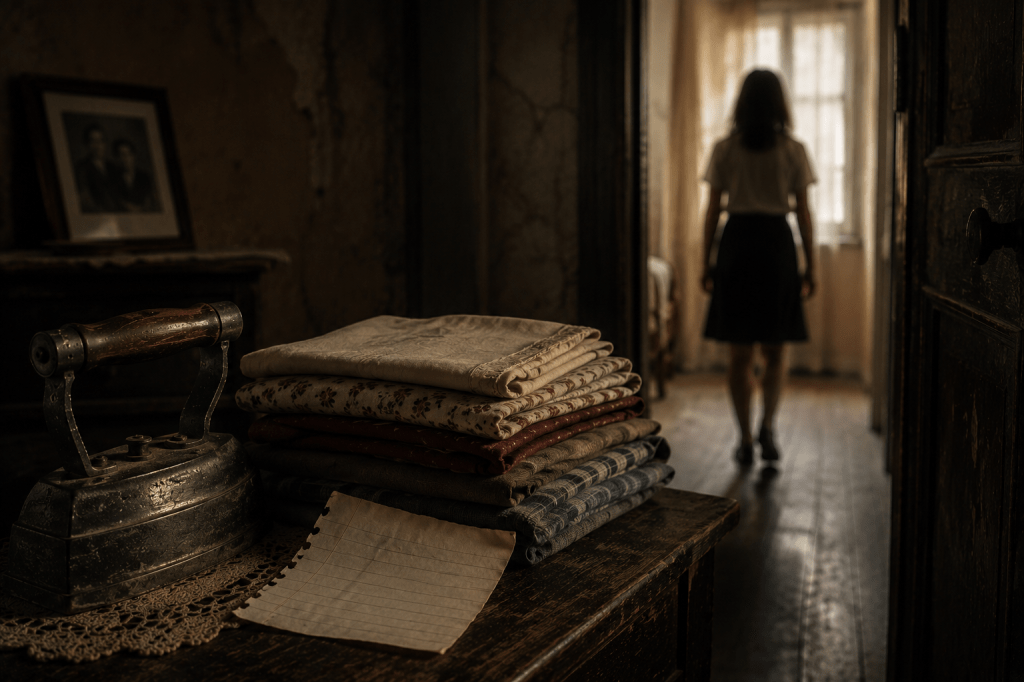
On Sundays, they gathered. The place was cramped, never fancy, except for her old “real wood” furniture and that ropero, her secret altar. Inside, neatly folded linens she barely used, reserved for special occasions. Bottles of perfume, half evaporated, some in their original boxes. Jewelry that, surprisingly, was not fake but rather old, striking jewelry pieces she had gracefully accepted from the many suitors of yesteryear.

I’d sneak a peek now and then, but she never let me hold any of her things.

One day, I took something, out of sheer curiosity and to take to school the next day. Not out of need, not even desire, I just wanted to hold something of hers and, yes, show it at school. It was a thin, gold chain. I just grabbed it, unaware of its significance.

Some relatives were visiting and they all tended to linger in the bedroom where I was, transfixed. The chain had crumpled into a knot and, panicked, I imperceptibly dropped it into a glass jar nearby, coughing nervously to cover what I was sure would cause an earsplitting noise.

“No one noticed. I’m good,” I reassured myself, a bit shaken.

Half hour passed.
“Mila, come to the kitchen at once!”

She was standing near that huge, cheap wall calendar.
April: Grand Canyon National Park.

There’s a place grandmother could not even fathom.

The glass jar sat on the kitchen table.

Reflections

The Voice on the Pier

I inadvertently noticed there were people standing on the pier for some kind of event. It was already evening, and the lights were warming up to that golden hue that flatters everyone. 

I wasn’t there, but I saw it online.

And somewhere between that gentle light, the music, a voice, not quite spoken, crept in:

“Don’t you feel bad that you can’t do things like that anymore?”

A pointed remark, for sure but yet not cruel, a bit smug.

“Wouldn’t you love to be out there, swaying to the rhythm, that cool breeze on your face?”

And, for longer than I’d like to admit, I agreed.

For a second, I didn’t want to be where I was. I didn’t want to be the person I’ve become, the one who now needs help getting up, whose tendency now is to say “not today” more often than “maybe later.”

But the voice didn’t linger.

Because a deeper one rose, quietly.

 “Even if I could go, who would I be standing there for? There was a time I faked it, and after a couple shots of whisky I could wear the usual veneer of charm. If I stayed out long enough I could pretend I was part of something.”

But now?

Now I stay home.
Now I notice when my cats blink slowly at me.
Now I write things down even if no one reads them.
Now I tell the truth.

Even when it makes me ache.

Leaking Coconuts

The window and the necklace

The window fell shut and the necklace went with it.

How, you ask? Well, it was old and had to be propped with a stick to stay even half open. The rotted stick gave way and, in my haste, I either tried to hold it or it was too heavy; the necklace, a cheap little thing I’d bought myself from the corner store, somehow got caught in the mess.

Its charms scattered across the kitchen floor like crumbs from a careless hand.

In the process, I scraped bits of skin from my hand and wrist, but stood there nonchalant as I started to peel the loose edges away.

Just act as if nothing happened.
Hum to old boleros no one knows you love.
Just act as if…

Leaking Coconuts

I Got You

The kitchen window is cracked, the one that looks out on the small backyard where the child spends hours.

“She’s going to think it was me. Maybe she won’t let me be out here again.”

The girl turns away from it, worried. Her eyes search the mid-space between fence and cloud.

Instinctively, she cups the wooden spool inside her pocket so no one will notice. There’s never anyone around — it’s just habit, this downplaying of her natural tendencies.

“I got you,” she whispers.

Leaking Coconuts

Rosa H.


Some women raise children because they’re expected to. Others do it because they choose to. Rosa chose me. She wasn’t my mother by blood, but she was the one who fed me, bathed me, held me and filled our home with the scent of comfort. I never told her what she meant to me. This is my way of doing that now.


It was the early 1900s in a remote southern town. Rosa was barely a teenager when she was sent to the city to work as a maid. Presumably, her family had sent her away to support herself or perhaps she ran off; either way, no one came looking, no one ever said a word.

How Rosa survived in that new environment was never discussed. But what did happen, what changed everything, really, was that while working as a domestic servant, she became pregnant by the employers’ son, Alejandro, most likely the result of abuse. She would go on to have three more children by him. Somehow, Rosa managed to settle into a second floor walk-up and sustain a modest, stable home for herself and, eventually, six children.

I’m not sure I would’ve done any better under the same circumstances.

By the time Rosa took me in, only her youngest daughter, Virginia, remained in the apartment. Virginia doted on me too and, as a 25-year-old unmarried woman, she began to see me as her daughter.

It was both of these women who cared for me, practically from birth through the first five years of my current lifetime. Rosa was the one who did the hard parts: the diapering, the feeding, the night wakings. She didn’t hesitate. She simply took me into her home and into her heart.

She was also a good cook, nothing fancy, just nourishing, comforting food made with care. By eleven in the morning, the whole apartment would be filled with the scent of something delicious: potatoes, rice, maybe quinoa. To this day, when I think of comfort food, I think of Rosa. That smell meant love, it meant home.

The first life altering moment I can remember was the day I was taken from Rosa. No warning. No explanation, just removed and placed in the “family” home.

No one ever thanked Rosa. I didn’t either. I was too small to understand what she had given me.

This is me saying it now, mamama. You were my mother. You chose me. And I miss you.

Leaking Coconuts

795 Inambari

Her right hand gently poured warm water over my chest, while her left cradled my head just above the surface. It was daytime. A soft breeze floated in from the open balcony door behind me.

The woman I looked at as she bathed me was my grandmother. Her name was Rosa. Had it not been for her, I likely wouldn’t have survived the first few days of my life.

The warmth of the water in her hand, the way it touched my skin, felt like floating in pure trust, in love. A knowing I still cannot verbalize.

This is the first recollection of my life, one of only a handful of memories that still fill me with a profound sense of belonging, of being safe. I see the metal tub, placed carefully between two of her wooden chairs. I feel the warm water on my chest. I remember perceivig a kindness as she looked at me, a baby she had chosen to look after despite economic hardship and other struggles.

That memory stands in stark contrast to what came after. But for a brief, golden time, I was the apple of someone’s eye.

And I never thanked her.

Not with words.
Not with time.
Not before she was gone.

I carry that now.