Leaking Coconuts

Way Off

Mila was late to school again. It mortified her, having to knock on the front entrance of the director’s office. Tuition was probably late again, and old Ms. Blanco liked to send teachers into the classroom to remind her, right in front of all the other girls. Mila had learned to spot them ahead of time so she could run and hide in the bathroom.

“I’ll just say my dad dropped me off at the wrong spot. Or that the bus broke down… even better: it’s part of my new exercise regimen, and I intended to miss my stop or…”

She missed her stop by a couple blocks. Again.

She wasn’t late often, just enough to feel it. Especially after switching to the public bus at eight, no more pre-class fun with friends who rode to school on the yellow bus. 

There was that one time, though. Mila missed her stop, got off at the next one, and sat on a bench to, what else, come up with something clever to say.

That’s when a teacher from the school spotted her, scooped her up, and drove her straight to the dreaded director’s office.

“I found this girl by the shopping center, way past the park, ” Ms. Duran reported. “Imagine, had it not been for me, no telling where she’d have ended up!”

Mila had been sitting on a bench at a bus stop four blocks away. She didn’t even know where the mall was.

No one asked her a single question. Just condescending looks. She was never late after that, afraid Ms. Duran might find her again and make up something worse.

“It’d sure be easier if I could still ride the yellow bus,” Mila thought. Her parents couldn’t afford the service past first grade, so by eight or nine, the girl had no choice but to take the public bus to school. 

“Dad says we’re saving to donate more to the poor…”
The Nitwitzes

The Nitwitzes

“I want a baby,” Meera announced.
Randolph blinked. “Now? Meera, we got bills. I’m still in school, remember?”

A month later, he strode into work, grinning like he’d won the Pick 5.
“Yo, imma be a dad!”

Silence. Stares.
Then, from the back of the office:
“Uh… congrats, man,” someone mumbled, the enthusiasm flatter than a DMV clerk’s stare.

At some point, Meera called her mother to inform she’d be moving upstate for the rest of the pregnancy for “support.” That lasted five weeks, which exceeded everyone’s expectations. By mid-trimester, she was back in the Bronx.

She and Randolph headed straight to his mother’s housing project apartment, where his older brother had been scrounging off their mother for years. The guy somehow got partial custody of his kids on weekends, so the place was already bursting. Randolph—the only wage earner in the whole setup—was crashing there too. Now Meera sat like a queen on the couch, either unwilling or unable to navigate social services for assistance.

Randolph’s grin was long gone. He seemed equally unwilling or unable to grasp what was really coming.

Much could be said about how society romanticizes childbirth and motherhood. And yes, indescribable admiration goes to women who choose to become mothers. But honestly, some of what goes into the process can be flat-out traumatic. Maybe both things are true. Maybe it can be both, traumatic and beautiful.

Still, here they are, the two nitwits in over their heads and at the center of it all, a baby.

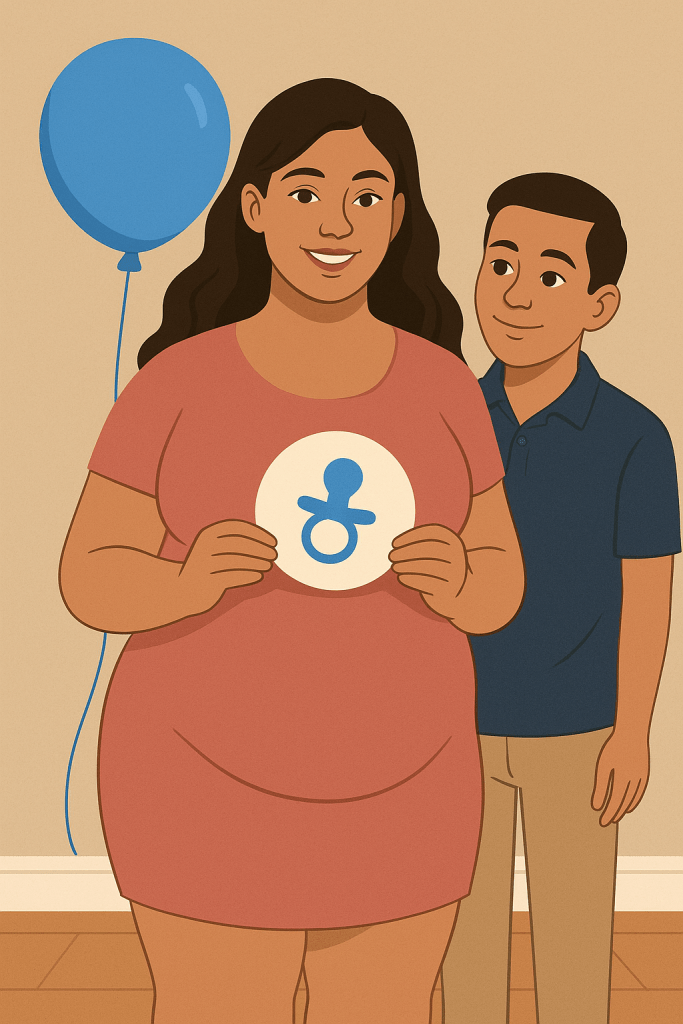
Randolph’s latest mission? Buy a couple dozen cupcakes from the bakery down the street. The kind with blue and white filling revealed when bitten into, an ultra low-budget gender reveal.

Meanwhile, Meera, still in a kind of stupor, struggles to navigate even state medical coverage, let alone housing or other basic resources.

And yet, somehow, the baby’s coming anyway.

The baby is coming.

Leaking Coconuts

Rosa H.


Some women raise children because they’re expected to. Others do it because they choose to. Rosa chose me. She wasn’t my mother by blood, but she was the one who fed me, bathed me, held me and filled our home with the scent of comfort. I never told her what she meant to me. This is my way of doing that now.


It was the early 1900s in a remote southern town. Rosa was barely a teenager when she was sent to the city to work as a maid. Presumably, her family had sent her away to support herself or perhaps she ran off; either way, no one came looking, no one ever said a word.

How Rosa survived in that new environment was never discussed. But what did happen, what changed everything, really, was that while working as a domestic servant, she became pregnant by the employers’ son, Alejandro, most likely the result of abuse. She would go on to have three more children by him. Somehow, Rosa managed to settle into a second floor walk-up and sustain a modest, stable home for herself and, eventually, six children.

I’m not sure I would’ve done any better under the same circumstances.

By the time Rosa took me in, only her youngest daughter, Virginia, remained in the apartment. Virginia doted on me too and, as a 25-year-old unmarried woman, she began to see me as her daughter.

It was both of these women who cared for me, practically from birth through the first five years of my current lifetime. Rosa was the one who did the hard parts: the diapering, the feeding, the night wakings. She didn’t hesitate. She simply took me into her home and into her heart.

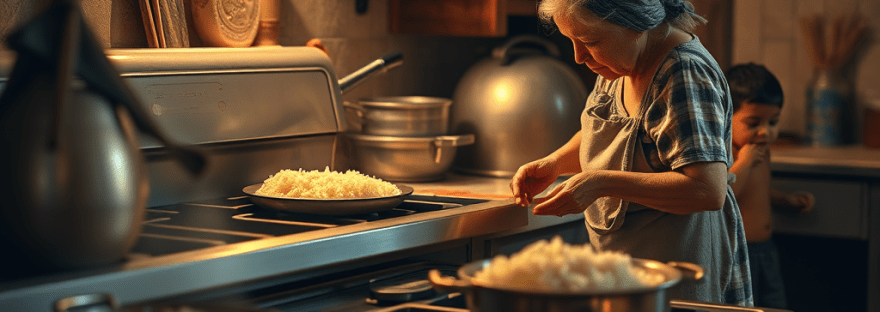
She was also a good cook, nothing fancy, just nourishing, comforting food made with care. By eleven in the morning, the whole apartment would be filled with the scent of something delicious: potatoes, rice, maybe quinoa. To this day, when I think of comfort food, I think of Rosa. That smell meant love, it meant home.

The first life altering moment I can remember was the day I was taken from Rosa. No warning. No explanation, just removed and placed in the “family” home.

No one ever thanked Rosa. I didn’t either. I was too small to understand what she had given me.

This is me saying it now, mamama. You were my mother. You chose me. And I miss you.