Reflections

In Each Other’s Way

I had been living with Manzoor for a handful of years.

Not the kind of living people imagine when they hear that. He had a place, and he had found a couple of roommates to help pay the bills. A generous if frugal man, Manzoor had never asked me to contribute a dime. He saved every penny, cooked for both of us on weekends. Meanwhile, my days were spent drinking alcohol, smoking and watching reruns on the portable black-and-white screen. Kindly put, mine was a numb existence. 

“You know the electronics store on 96th and Broadway? I got a job there,” I told him.

He was getting ready to leave for a month-long trip back to his country of birth. I was annoyed by it, though I couldn’t say exactly why. I had always known he was married. That he had children there. None of it had mattered to me.

If anything, it felt oddly flattering when he told me he wanted to take me as his second wife.

At the interview, I sat across from two managers and told them, without hesitation, I was there for the assistant manager position.

Looking back, one of them must have mistaken my naivete for chutzpah. They gave me a job behind the Walkman counter.

It definitely wasn’t chutzpah.

Soon after Manzoor left, I met Joe. And Rita.

That’s when things began to tilt.

A couple of months in, Joe called me one night to declare his undying devotion, insisting he was done with Claire. As in completely done.

Claire, however, had not received that update and firmly believed she was about to become his wife. She didn’t take kindly to me moving into his apartment, just a few blocks from where I still technically lived with Manzoor.

It was wrong, but I did not even pause to question it.

Around that same time, Rita started working the register.

I remember the first time she looked at me, it was not in passing, not the way coworkers do, but with a kind of quiet insistence, like she had already decided something. 

She didn’t rush it. I pretended not to notice her subtle approaches, building a kind of anticipation I hadn’t felt in years.I was flattered. 

And little by little, she made her way into my days, and then into my thoughts, until there was barely a moment she didn’t occupy. 

The day came when I saw Manzoor off at the airport and, as we embraced goodbye, I cried uncontrollably. I remember his face, the way he looked at me. I think he believed it meant I loved him.

As I write this now, I hope he didn’t.

Because what followed doesn’t match that kind of love.

By the time he called me, as he promised he would, I felt… nothing I could name. I spoke to him easily, kindly, but without longing. Like speaking to someone just a few doors down. 

I cried when he left. I didn’t miss him when he was gone.

What unsettles me now is not that I left. It’s that I had already left before he ever boarded the plane.

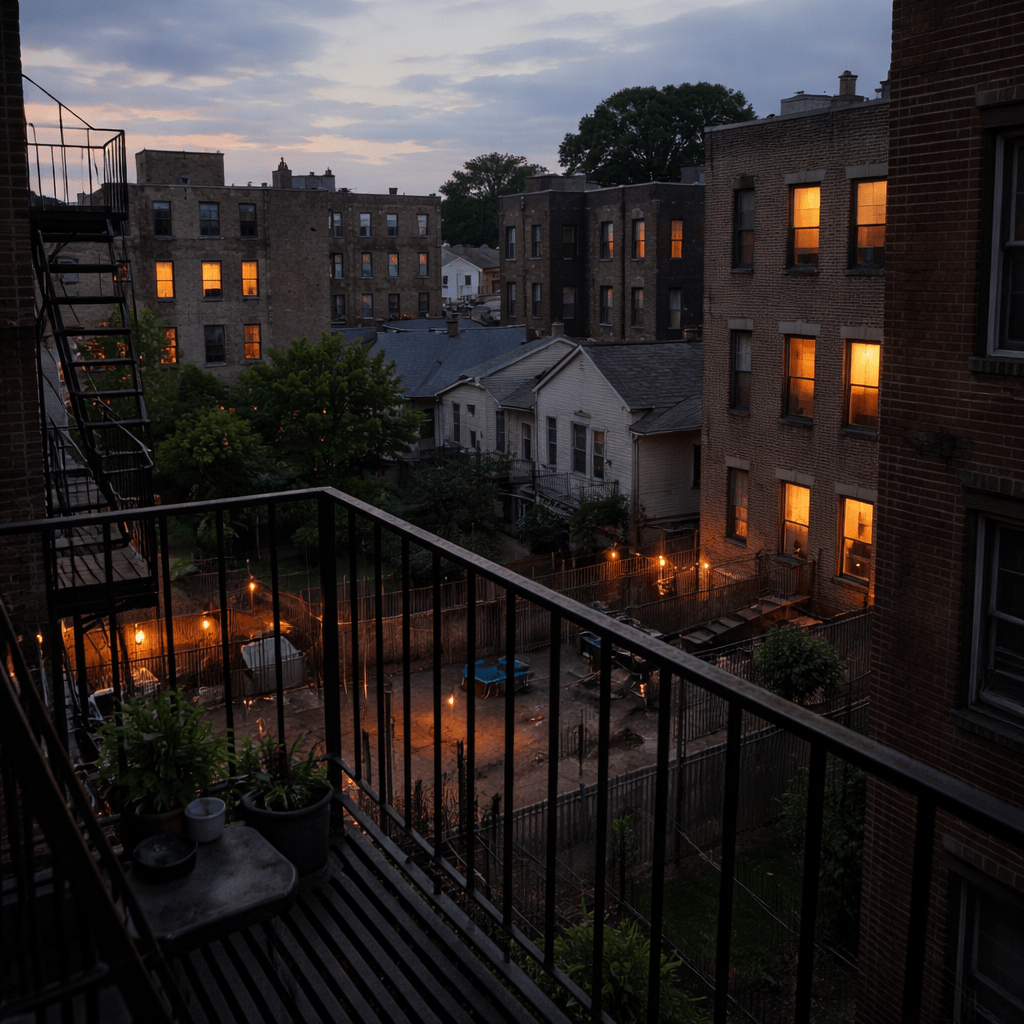
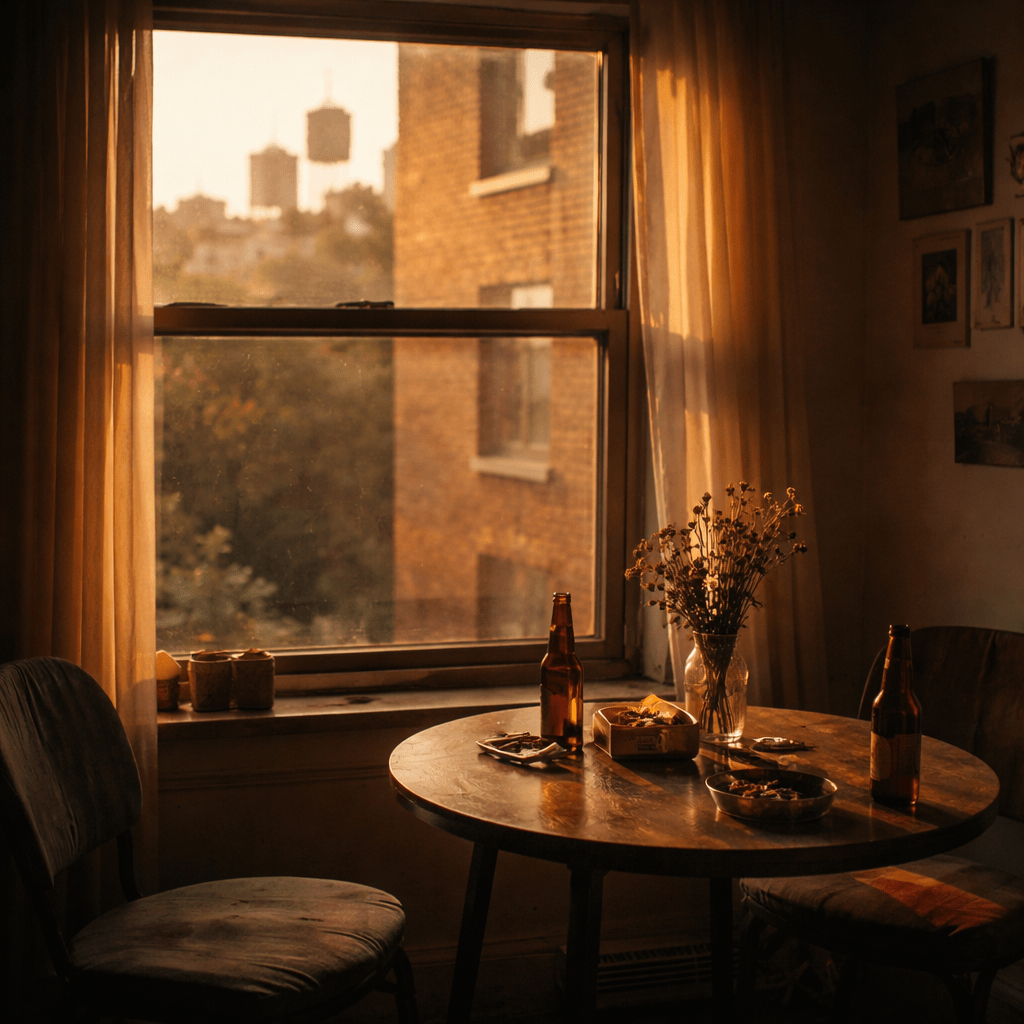
So while Manzoor was away, impulsively, I packed my few belongings, met Joe downstairs and off we went to look at hues of sunset off the brick wall out his kitchen window. 

Joe, to his credit, not even once tried to force things between us; we just settled in like two old beer guzzling buddies while I fantasized of Rita’s fragrance and how it would all be like. 

We found a rhythm. It didn’t last.

Rita got fired for theft and I made an ass of myself by staging a ridiculous, pompous exit, right there in front of everyone. And within minutes, there was Joe running down Broadway: 

“Hey, hey, wait for mee!” as though unhinged.

What can I say, three clueless people just going about aimlessly. 

Not long after, we were behind.

Claire was ecstatic.

Rita soon asked me to move into her small apartment, much to the displeasure of her teenage son whose opinion was never even asked. 

We lasted ten years. 
Reflections

It Wasn’t Free

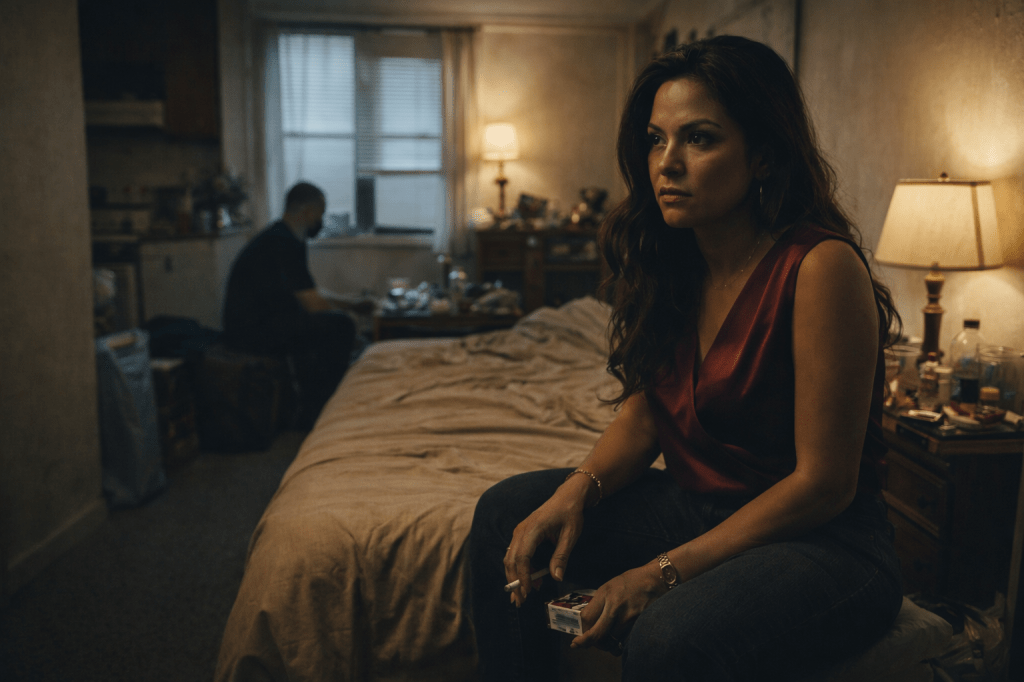
“I’ve got work with Mathew tomorrow, but we’ll get busy right after,” Rita said, smiling in anticipation.

I knew what “busy” meant.

Her gig was as an interpreter for a small legal firm, specifically for Mathew.
Mathew liked early mornings and clients before sunrise in Lower Manhattan.
The kind of cases that didn’t need to be mentioned at home.

Mathew had an overt interest in Rita, who was decades younger.
She was, at best, a tentative, often unintelligible, interpreter.

Deep in the throes of addiction, I pretended to believe the story. I regret that now.

“So… are we busy today?”

That was the code for I’m buying coke.

Ours was a daily kind of “busy,” to the exclusion of almost everything else, even whatever we once called a relationship.

Every now and then, we’d talk about looking for work, and she insisted Mathew would always be there, which made sense since he owned the building.

I convinced myself she lived there rent-free, a single mom and all…

It wasn’t free.

She paid for it in trade.

I’m not certain knowing would’ve made a difference.

Ten years went like that.
Blurred.
Wasted.
Hard to believe now.

It was a time when internet cafés and Video Professor were still a thing. Rita enrolled in free computer classes. At my suggestion, she recorded the lectures for me to transcribe.

One day she came in, animated, telling me about a job training program working with people with disabilities.

We’d been living together for almost ten years and, by then, I needed something to change.

Within days, I was sitting in a classroom.

That’s when Regina walked in.

Reflections

Tap-Tap on the DL

Three taps meant: I’m here. I’m thinking of you.

It was the middle of August in New York City, I’d never been to the Bronx, let alone that far uptown on the 2 line.

Buzzer.

“Hi, I have an appointment to see Brenda,” I said in my best voice to the few women in the management office. 

“That’s me, come sit down,” a pleasant, older woman gestured to her work area. 

And within the hour, I had been accepted into their program for women with addiction problems. 

I went into what someone later termed transition shock at the noise level, in between people chatting, music blasting from the dining room while someone played a different playlist in the backyard. But right after rushing up three flights of stairs to put away the plastic bag with the stuff, there I was, in that very room from where the deafening sounds came. 

I detest plastic bags to this day, the cheap, flimsy NYC bodega kind. That one. Everything I owned fit inside it.

Deafening to me. 

In time it almost grew on me, especially a handful of the women who, for different reasons now contribute to this story. 

“Hey, you want one?” offering an open pack of Newports, from the door to the backyard. 

That was Myrna, the young woman with whom I shared the room. Her story was of abandonment, neglect even of self as addiction had swallowed whatever plans she once had.

And Esther who, as someone “confidentially” shared, relapsed and either left or was removed from the program. She and I would’ve made great friends. 

There was Ramos who, true to the old lesbian stereotype, comported herself with a theatrical  level of masculinity. She once gifted me a pair of black Jordache sneakers. 

Full stop. 

Then there was Diana. She took an interest in me and, I, in turn, let myself be flattered by her admiration of me. We soon became “an item,” as she enjoyed saying, much to the chagrin of an admirer I had inadvertently encouraged. I had become reclusive, venturing downstairs only for a quick cigarette and a meal, I felt utterly uncomfortable, and spent most days in the room. 

Diana’s interest, her gentle coaxing, got me out of that room, and out of my head.

It felt good to be asked: “Hey, where were you all day?” No one had asked me that in years. We got to the point of late night conversations, her feet discreetly on my lap, going over old VHS tapes. A Field of Dreams was the very first of many movies she shared with me. 

In the evenings, we felt a certain intimacy to my tapping on the ceiling to let her know I was back, much to the amusement of Myrna. Three taps, code for “im here, im thinking of you.” 

And Darlene, the go- between, carrying love notes back and forth in her ever present wicker purse. And also the CD player left on my bed. “Play track 14” discreetly tucked in. 

The one day when things got intense between Diana and me while my roommate was out. A nice, slow burn, fewer and fewer pauses. 

The door burst open. I felt my stomach drop. 

My admirer screeched in horror and ran to the management office. 

I was given a week to move out, a magnanimous act from a director who prided herself in having removed a pregnant girl from the program despite the girl’s kneeled supplication. 

In my optimism, I took the embarrassment as a clue to pursue a deeper involvement with Diana. 

It did lead further into my renewed life in sobriety although not in ways I had expected. And for the first time in over two decades I was not disappearing into a bottle of whisky.

Reflections

Anyone from New York?

It had been a couple of years since I’d seen Carlos, an old acquaintance from my days of daze.

“Here, use my screen name, someone will reply!” Carlos insisted, confident that his idea was the solution to my solitude. I had told him that yes, I’d been looking to meet someone, although not necessarily for romance—more along the lines of companionship.

Not a single reply.

We soon parted after the minor disappointment, Carlos assuring me no one replied because I was online under his screen name. “Next time you come over, we’ll set you up with your own,” he said warmly. I never saw him again.

This was in the early 2000s, when AOL chat rooms were still a thing.

Life went on with its frequent struggles and detours until I had the funds to buy myself a desktop. A used one, refurbished by Per Scholas. After a lifetime in the stupor of addiction, this was among the first significant choices I made for myself.

The desktop turned out fine for my purposes, which were essentially to stare at it after work and figure out how to do things. One evening I remembered Carlos and his much-touted AOL chat rooms, though not his screen name.

I eventually got bold enough to go from lurker to occasional chatter, and while there were a few fun conversations, most people seemed interested in casual encounters.

Many chats later, I’d grown tired of them, mostly for that reason. Things were gradually improving for me. I’d started looking for an apartment, still worked for a well-known nonprofit, and had begun college as an adult student.

My sobriety date came around—no one with whom to share the suffocating July heat. It was still just me in that basement room with the small rectangular window that looked out onto gravel and the feet going in and out of the driveway.

“Let’s take a look at the chat room,” I told myself, looking to lighten the day.

The chat was much as it had been in prior weeks: the regulars, their childish cliques, their conversations peppered with the same old obscenities. Shortly after, I turned the desktop off, in a weird mix of disgust and loneliness. In retrospect, the mix of emotions was more than I could explain even today: I found myself covering my face with both hands, sobbing, asking Spirit for someone for me. The intensity of that moment surprises me to this day.

In late July, I typed: “Anyone from New York?” in a cute blue font, no less. The old refurbished desktop wobbled on the box it had come in. Maybe good things do feel fuller when shared. 

“Hi.”
“I’m in New York.”

After a few pleasantries, I cut to the point.

“Do you have children?”

“Yes, they live with their father and they’re big… is this a problem, sweetie?”

“No. They’re not that small, and they don’t live with you.”

“I have a second question: do you cook?”

“What? I can make you a meat stew that’ll rattle your bones, the best pork chops you ever tasted,” her excitement practically jumped off the screen.

Wouldn’t you know it? We met just a couple of weeks later, and not long after that, she showed up with a tray of the most delicious baked ziti. She brought it to our spot in the nearby park.

That was part fun, part embarrassment, because I lived in a basement room, but it really turned out to be a lovely afternoon. She even let me keep the leftovers. In retrospect, that day, her gesture, us sharing a homemade meal for the first time, right there on a bench in Bronx River Park, was a gem of a moment.

We’ve been together for over twenty years, not only each other’s spouse but each other’s person.

in that basement room, I had asked Spirit for someone for me. I still wonder if that blue-font question into an AOL chat room was only me reaching out or if something had already started reaching back.

Leaking Coconuts

Way Off

Mila was late to school again. It mortified her, having to knock on the front entrance of the director’s office. Tuition was probably late again, and old Ms. Blanco liked to send teachers into the classroom to remind her, right in front of all the other girls. Mila had learned to spot them ahead of time so she could run and hide in the bathroom.

“I’ll just say my dad dropped me off at the wrong spot. Or that the bus broke down… even better: it’s part of my new exercise regimen, and I intended to miss my stop or…”

She missed her stop by a couple blocks. Again.

She wasn’t late often, just enough to feel it. Especially after switching to the public bus at eight, no more pre-class fun with friends who rode to school on the yellow bus. 

There was that one time, though. Mila missed her stop, got off at the next one, and sat on a bench to, what else, come up with something clever to say.

That’s when a teacher from the school spotted her, scooped her up, and drove her straight to the dreaded director’s office.

“I found this girl by the shopping center, way past the park, ” Ms. Duran reported. “Imagine, had it not been for me, no telling where she’d have ended up!”

Mila had been sitting on a bench at a bus stop four blocks away. She didn’t even know where the mall was.

No one asked her a single question. Just condescending looks. She was never late after that, afraid Ms. Duran might find her again and make up something worse.

“It’d sure be easier if I could still ride the yellow bus,” Mila thought. Her parents couldn’t afford the service past first grade, so by eight or nine, the girl had no choice but to take the public bus to school. 

“Dad says we’re saving to donate more to the poor…”

Leaking Coconuts

The Portrait

“I know what it needs,” Julia said excitedly, then hurried to the bedroom and came right back out, clutching a pearl necklace.

She stood before the large mirror, adding final touches to her hair as she hummed a bolero.

Mila crouched on the floor, unseen, peeling a tangerine as she watched in awe. To her, Mom looked like a movie star.

A nationally known painter had been hired to do a portrait of her. She had never been wealthy but, after a couple of her husband’s commercial deals came through, she suddenly saw herself as Madame Bovary.

“She doesn’t even know I’m here,” Mila whispered. “She forgot all about me.”

She ran to the kitchen for another tangerine, then headed upstairs to sit cross-legged on the floor and watch The Flintstones.

The painting, in an ornate golden frame, hung proudly in the living room, until they could no longer keep the house.

Not long after, Mila saw it again, propped against a wall in some nondescript back room, surrounded by everything else they owned.

They’d been thrown out, bougie frame and all.

Reflections

Lumpy Beds and Other Luxuries

Last night I must’ve been half asleep when I started muttering about our bed, how that old, lumpy mattress would soon just kill my back dead. How is it that I still have this thing here?

The truth? I could’ve replaced it long ago. I could’ve upgraded the furniture, bought the better things. But I’ve never cared much for that kind of new. I’ve always preferred what’s stayed with me, the things that have weathered time alongside me.

And yes, the bed could use replacing. But here’s what I remembered, somewhere between half-sleep and gratitude: it wasn’t all that long ago that I was dozing off in laundromats, trying to stay warm in the dead of winter, or in emergency rooms, pretending to be someone’s family.

A spot on a lumpy bed, a blanket like the one my wife gave me, would’ve been heaven.

I don’t ever want to forget the long road that led me here, to the comforts of home and, yes, our old bed and the tender lives that came to rest beside it.

Remember where you came from.
And be gentle with where you are.

Reflections

The Nitwitzes

“I want a baby,” Meera announced.
Randolph blinked. “Now? Meera, we got bills. I’m still in school, remember?”

A month later, he strode into work, grinning like he’d won the Pick 5.
“Yo, imma be a dad!”

Silence. Stares.
Then, from the back of the office:
“Uh… congrats, man,” someone mumbled, the enthusiasm flatter than a DMV clerk’s stare.

At some point, Meera called her mother to inform she’d be moving upstate for the rest of the pregnancy for “support.” That lasted five weeks, which exceeded everyone’s expectations. By mid-trimester, she was back in the Bronx.

She and Randolph headed straight to his mother’s housing project apartment, where his older brother had been scrounging off their mother for years. The guy somehow got partial custody of his kids on weekends, so the place was already bursting. Randolph—the only wage earner in the whole setup—was crashing there too. Now Meera sat like a queen on the couch, either unwilling or unable to navigate social services for assistance.

Randolph’s grin was long gone. He seemed equally unwilling or unable to grasp what was really coming.

Much could be said about how society romanticizes childbirth and motherhood. And yes, indescribable admiration goes to women who choose to become mothers. But honestly, some of what goes into the process can be flat-out traumatic. Maybe both things are true. Maybe it can be both, traumatic and beautiful.

Still, here they are, the two nitwits in over their heads and at the center of it all, a baby.

Randolph’s latest mission? Buy a couple dozen cupcakes from the bakery down the street. The kind with blue and white filling revealed when bitten into, an ultra low-budget gender reveal.

Meanwhile, Meera, still in a kind of stupor, struggles to navigate even state medical coverage, let alone housing or other basic resources.

And yet, somehow, the baby’s coming anyway.

The baby is coming.

Leaking Coconuts

Taste Test

The old house had an open-air courtyard and, as usual, Mila was milling about with the same empty cardboard box which she liked to put over her head. It was her space, her way of dealing with people she did not know and did not want to be with. Lost in another daydream, she heard her father’s voice: 

“Mila, come taste this new, improved way of making us mashed potatoes!” 

His tweak to improve a humble bowl of mashed potatoes? Mash them in a blender. 

It had turned into a gummy paste, quite unappetizing. 

“Oh, it’s good, Dad, I like it!” She could not bear to tell him. She quickly retreats back into the cardboard box, embarrassed for both. 

As he walked back into the kitchen, the child heard him say, almost imperceptively: 

“This tastes like shit…she didn’t want to hurt my feelings.” 

She lifted the box slightly above her eyes and kept watching until the hallway swallowed him, then pulled the box back down over her eyes. 

Reflections

She Said, Calmly

It was a bright afternoon, still early, the kind of winter morning when holiday shopping hits a fever pitch. The neighborhood buzzed, overflowing with offers of cheap “designer” perfumes and last minute deals.

I was standing outside the post office when I heard them. Not saw — heard.

“Mom, mom!” one of the girls shouted, breathless with joy.
“We can get it, can we? Yes, right? Pleeease?”

She couldn’t have been more than ten, nearly bursting with excitement.
Her younger sibling stood beside her, parroting her every move, not that she fully understood.

Then I noticed their mother.

She seemed to be in her 30s, frayed, like she was holding everything together with a whisper. But when she turned to them, her voice came out calm. Surprisingly calm.

“That’s enough,” she said.
“Whatchoo girls think? You be asking for all sorts of shit like it’s free, but listen,
Christmas ain’t free.
Don’t say nobody told y’all.”

And just like that, the girls fell silent. So did the entire block, it seemed.

To this day, silence surrounds that memory of me, standing on that corner by the post office, the bright winter morning, and the somber expressions on the girls’ faces.
I have never forgotten it.